Not in the middle of summer, but as early as mid-April—set off on a journey filled with positive vibes? A week before Easter, create a warm, family-friendly atmosphere all around? That’s exactly what Kasia and Jacek Sienkiewicz did for their fans in Łódź on Palm Sunday. Of course, they weren’t alone on the Atlas Arena stage, as they were joined by a band of over a dozen musicians and a special guest. One thing is certain—it’s a pleasure to watch Kwiat Jabłoni blossom on the Polish music scene!
Going back to the roots
The Sienkiewicz family and company kicked off the show a few minutes past 8 p.m. with the song “Chodźmy nad wodę” from their debut album *Niemożliwe*. More than six years have passed since that album was released, but both musically and lyrically, the song still sounds incredibly fresh. The melodies drawn from Jacek’s mandolin, combined with Kasia’s velvety voice, wove together into a unique mosaic, and I think that by the end of the first verse at the latest, most of the concertgoers’ thoughts were already somewhere by their favorite body of water.
The thunderous applause at the end of the song showed that everyone loved the concert’s opening. Encouraged by this, the band picked up the pace and performed “Turysta.” It’s a track that also appears as a bonus on “Niemożliwe,” but it’s even older than “Chodźmy nad wodę,” since Kasia and Jacek used to sing it back when they were still part of the Hollow Quartet. And here, too, one could confidently say that neither the music nor the lyrics had aged a bit.
Multicolored slides
An analysis of previous setlists—including those from Gdańsk/Sopot and Warsaw—suggested that the song “Za siódmą górą” should be the third to be performed. And that is exactly what happened. After this otherwise very poignant song (don’t let the cheerful “na-na-na-na” in the chorus fool you!), the time finally came for the official introduction of the evening’s main stars to the Atlas Arena. Preceded by a quick survey asking how many people were seeing the band live for the first time; a hint of what was to come; the customary wishes for a good time—and… we were ready to continue on our musical journey.
After performing three songs from their debut album, Kwiat Jabłoni treated us to two tracks from their latest release, *Pokaz slajdów*. First, we all listened intently together to “Był tam, gdzie był.” It’s a rather melancholic song, at times even somber. With its elaborate instrumental arrangement and the hall’s interior shimmering blue, it naturally reminded each of us that it’s worth looking within ourselves from time to time and reflecting on our own identity.
I can't believe it!
“During our last tour, we felt a bit like we were on a school field trip. Traveling around the country by bus, we get the impression that we’re on a summer camp. And we want to bring that spirit we’ve managed to cultivate within the band to every venue where we play a concert,” Jacek explained at one point, shedding light on the inspiration behind this year’s tour name. It’s no secret, however, that every journey is best appreciated only after returning home. And “Dom” (Home) was the next song the Warsaw-based siblings treated us to. So the atmosphere at Atlas Arena turned nostalgic again, if not slightly melancholic. But all of this was part of a bigger plan, as the Sienkiewicz siblings had warned: it would be a little sad at the beginning so that the second half of the concert could be joyful.
Before the next number began, the big screens showed excerpts from black-and-white newsreels from the communist era, all centered on the topic of vacations. Thus, Kwiat Jabłoni evoked memories of youth for older listeners, while for younger ones, it likely caused a mild shock and a sense of disbelief that Polish vacations once looked like that. And when the screening ended, it was the perfect opportunity to realize that sometimes in life, the hardest thing is… to be yourself. “Poproszę więcej siebie” is a track that was released last summer and hasn’t appeared on any album yet. However, with its summery vibe, it’s a fantastic hit to promote this year’s tour, and we got to see that for ourselves on Sunday evening.
The Storm and Nightmares
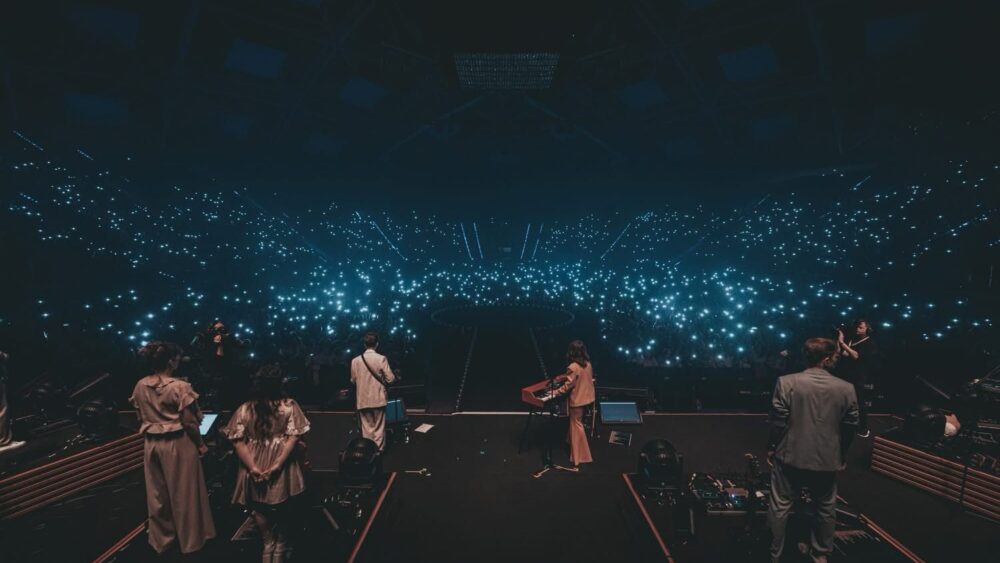
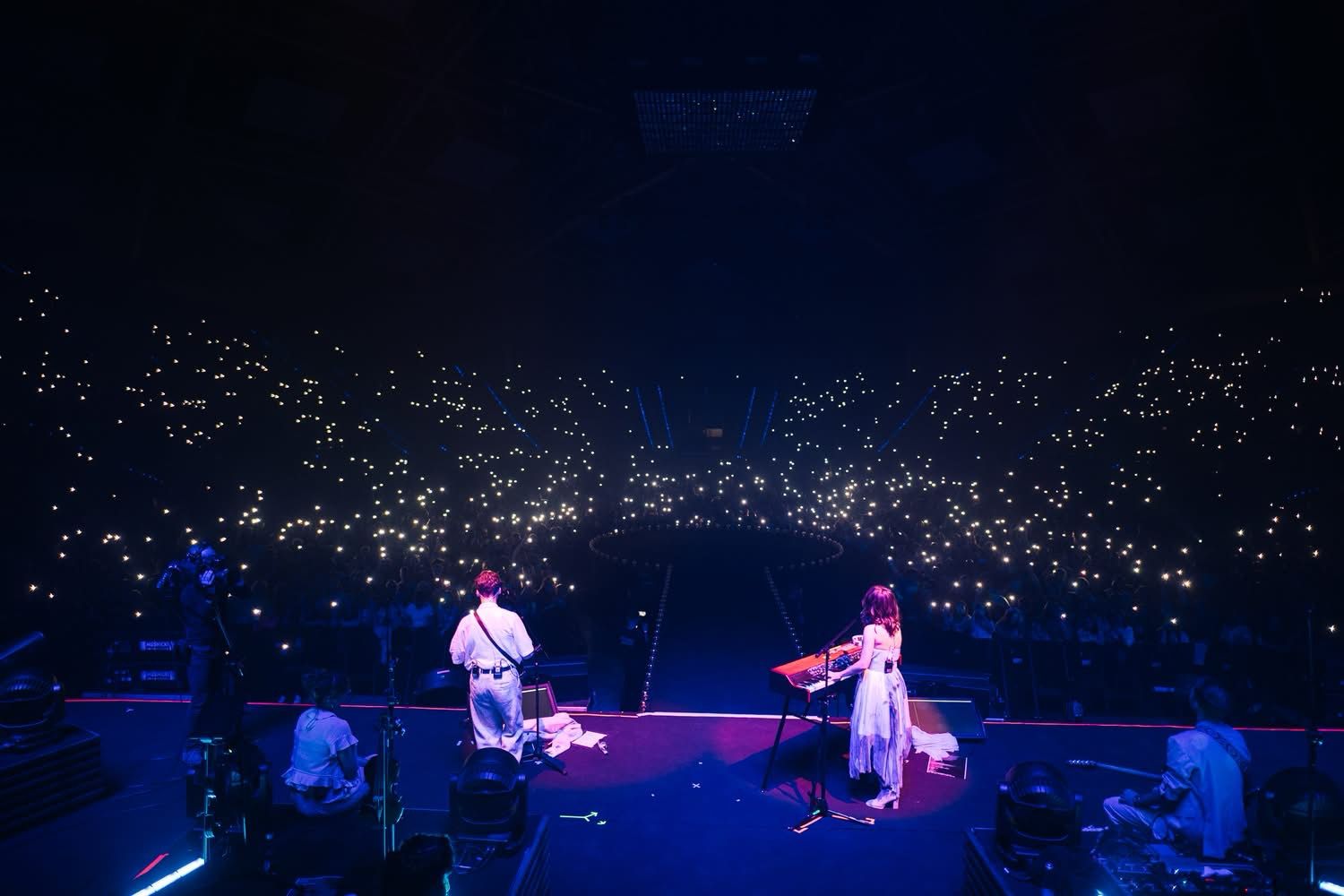
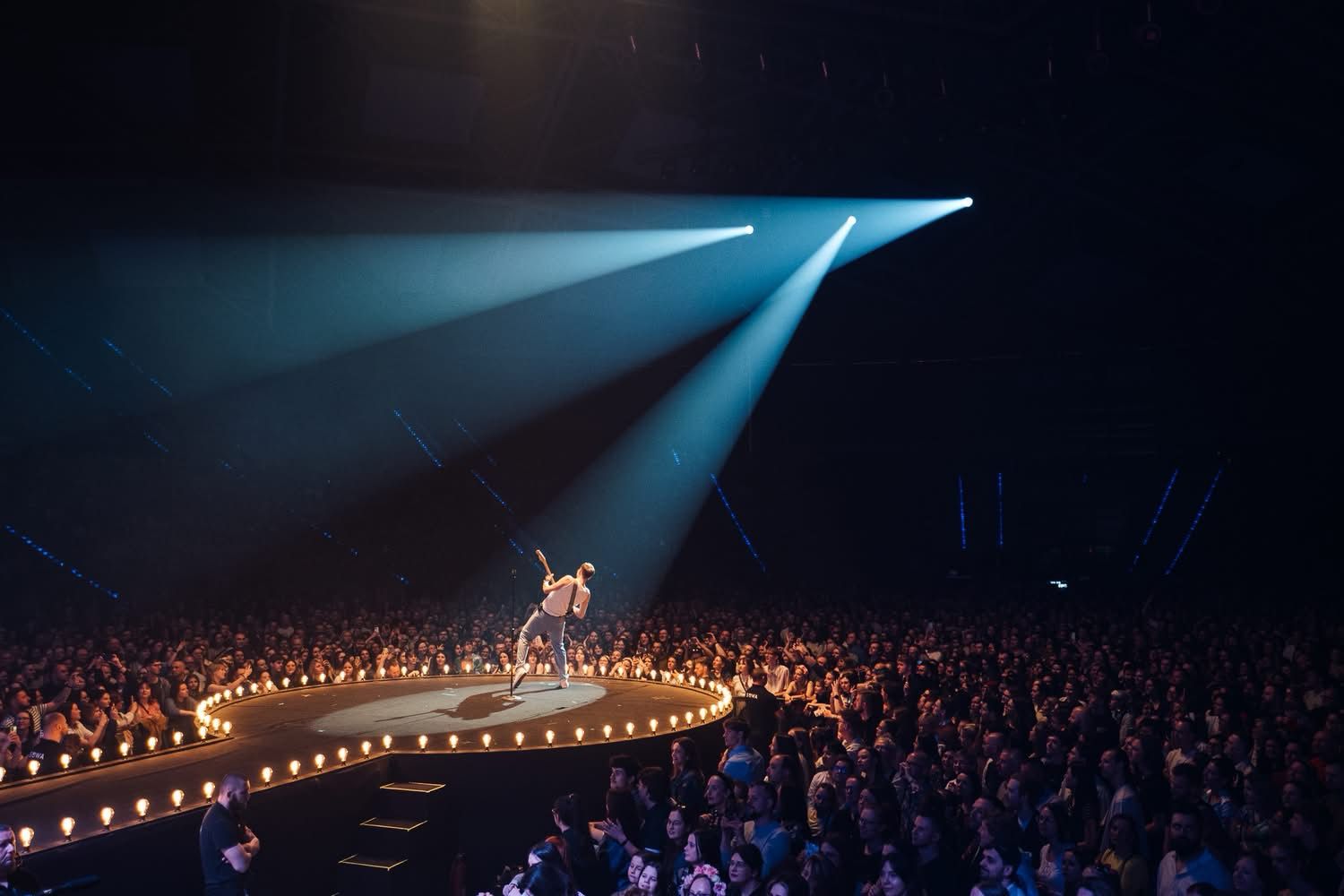
When Kasia and Jacek returned to the stage from a platform specially prepared for them—one that “cut into” the sea of fans—the atmosphere at Atlas Arena felt a bit more intimate again. With the lighting in the arena toned down (only the stage was illuminated), it was much easier to grasp the emotional message of the song “LEGO.” This track, featured on their latest album, never received a single release, but it was clear that the audience loved it nonetheless. “Thunder rumbles in the sky, crashing with all its might; if I want to, I have to go to you”—these words from the chorus, sung along to thousands of lit flashlights, etched themselves deeply into many hearts and minds…
After a set of newer songs, we returned to material from the first album for a few minutes. The deeply hypnotic “Wodymidaj intro” and “Wodymidaj” were definitely a hit, especially since most of the band had since closed the gap with the audience and joined them on the stage. Later, the fans closer to the stage were drawn into a light-hearted provocation by Kasia, who asked them to demonstrate what her nightmare might actually look like if, when asked for their impressions, the audience made it clear that the concert wasn’t fun at all. And then—without any warning—“Burza” came on. It’s another track that should be on the band’s new album, and for now, they’re successfully promoting it on the “Turnus Tour.” During this “Burza,” no one got hurt—unless someone’s hands started to ache from clapping too hard, which Jacek had encouraged with a smile.
The flame under control
As the first hour of the concert drew to a close, the big screens showed another episode of *Kroniki Filmowe* (Newsreels), offering a glimpse into summer vacations during the communist era. And right after that, we got a taste of just how tough life can be for a clubgoer. “They Came and Closed My Club” is a song from the first album, but two years ago it was given a fresh take thanks to a collaboration with Łydka Grubasa. In both versions, it’s one of the band’s most rhythmic tracks, and anyone who wanted to could really work up a sweat this time, trying to keep up with the band members’ dance moves on stage. And right at the end, we got to admire some impressive instruments. Hmm, I wonder what Kasia and Jacek will come up with for this composition for their next concert tour? Because it’s more than certain that they’ll continue to perform this energetic track live.
Before we got back to their latest album and “Song About the Sun,” the band made sure the audience had plenty of oxygen and led a group deep-breathing workshop. And the performance itself—well, it had something truly magical about it. First, the band members sat in a circle on the stage, and then a bonfire appeared among them, and I think everyone in the audience felt, at least for a moment, as if they were teenagers again. The glow of the fire, the acoustic sound, and the original lyrics effectively encouraged reflection on the fact that sometimes we forget or are unable to enjoy the here and now.
In harmony with nature
Next, Kwiat Jabłoni, still seated in a truly magical circle on the stage, treated us to “Kwiat w doniczce.” Before that, however, he encouraged the audience to support the Workshop for All Beings, an organization dedicated to protecting wildlife in our country. “Nature is a value in and of itself, and let’s care for it selflessly,” appealed the musicians, who have been known for their pro-environmental activities since the very beginning of their career.
Kasia and Jacek are also known for their remarkable ability to breathe new life into songs that have begun to fade into obscurity. After all, less than three years ago they even released the album “Wolne serca” to mark the 78th anniversary of the Warsaw Uprising, featuring their own interpretations of ten songs they selected themselves (including “Nie pytaj o Polskę,” “Wolne ptaki,” “Nie, nie, nie,” and “Jutro możemy być szczęśliwi”). This winter, however, the Sienkiewicz sisters turned their attention to “Nazywam się niebo,” thereby paying a unique tribute to Natalia Przybysz, who was also known years ago as a member of the group Sistars, where she sang alongside her sister Paulina. The public result of these efforts could be heard for the first time at the end of March at Torwar, and for the second time just a week before Easter at Atlas Arena. Everyone can judge for themselves how it turned out, but I must admit that personally, I like this cover—still fresh with newness—more than the original.
The sure thing didn't disappoint
Following “Nazywam się niebo,” the next song on the setlist was “Drogi proste,” which we first heard upon the release of the album “Mogło być nic” (the band’s second album). A few months later, the song made headlines again when a version featuring Julia Pietrucha and musicians from the Kraków Street Band was released. In Łódź, “Drogi proste” was performed without any outside support, but this in no way detracted from the composition.
““Czarny pył” (from their latest album), which we heard next, is—without taking anything away from Kasia and Jacek—first and foremost a showcase for the horn section. It was the horn section that made our legs start swaying on their own, and the vocals sounded even more lyrical than usual. It got even more beautiful when the band played “I’ll Go to Sleep Late Tonight.” In the history of Kwiat Jabłoni, this is a unique song—as their first official single, it opened the door to fame for the band and remains their most popular track on YouTube to this day (over 53 million views). It’s the kind of composition that almost always sounds absolutely phenomenal—and it was no different at Atlas Arena.
The test wasn't necessary
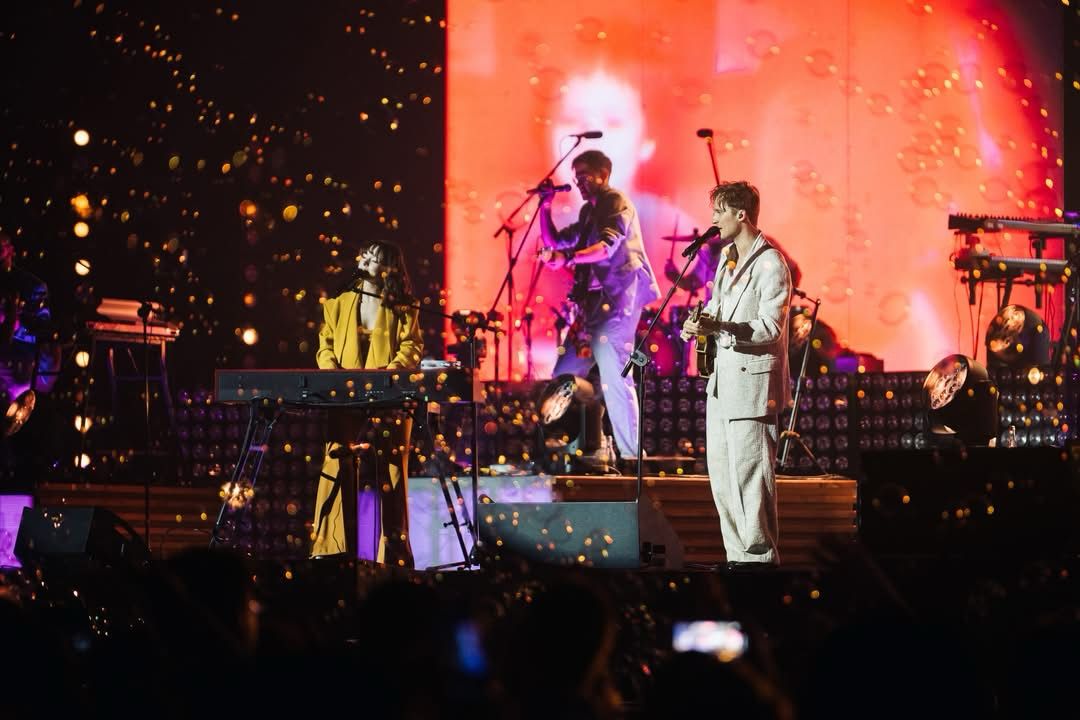
But the most magical moment of the concert was yet to come. The setlist indicated that it was time for a special guest, who was supposed to be a different artist at each stop of the “Turnus Tour.” From the previously published list, one could therefore cross off Anita Lipnicka, Ewa Bem, Majka Jeżowska, and Muniek Staszczyk. Could it be…? Yes! It was in Łódź that this historic moment arrived, when Kuba Sienkiewicz took the stage alongside Kasia and Jacek Sienkiewicz for the very first time. “Our guest today has influenced us and what we create from the very beginning. We’ve known and listened to this artist forever. Ladies and gentlemen… Dad,” came the announcement, which clearly was a deeply moving experience both for those speaking the words and for the man they were addressing, who, to the accompaniment of applause, strided onto the stage with his guitar.
The Sienkiewicz trio, clearly relishing the moment, pulled off a musical coup. To be precise, they performed “Kiler,” the iconic song from the iconic film. Could anyone have asked for more? That’s a rhetorical question, of course, and it must be emphasized that the 64-year-old patriarch of the family was in no way outdone by his children in terms of energy. Which makes the Elektryczne Gitary concert scheduled for October 18 this year at Atlas Arena look more than promising.
– Our dad joined us on stage in Łódź. It was the first time we performed together. The song we played together had stuck in our heads so firmly during our childhood that we didn’t even have to practice it. I guess you liked it, because you were singing along with us at the top of your lungs. We were moved. Thanks, Dad—we read the next day on Kwiat Jabłoni’s official Instagram profile. We thank you too, and for now, we’re tentatively asking for an original song we can perform together!
From the Forest Opera to Moomin Valley
If, with the final notes of “Kiler,” the band had decided to abruptly end the concert for reasons known only to themselves, no one would have held it against them. But fortunately, neither Kasia nor Jacek, nor any of the accompanying musicians, intended to cut the show short. Thanks to that, we were able to marvel at the performance of “Od nowa,” among other songs. Two years ago, this song heralded the band’s latest album to date and earned them their only Amber Nightingale award so far at the Top of the Top Sopot Festival. Judging by the audience’s reaction during this song, one can safely say that no one in Poland today is able to blend elements of pop and folk in such a sophisticated—yet accessible—way.
And to wrap up the first set, Kasia and Jacek treated us to “Buka.” Anyone who’s ever read about the Moomins knows exactly who the title character of this song is. If you don’t know who she is, you’d better catch up on that right away. That doesn’t change the fact that the atmosphere in the hall became incredibly sentimental during “Buka.” But who among us doesn’t struggle with various fears and could remain indifferent to the lyrics of this ballad?
Until I'm out of breath
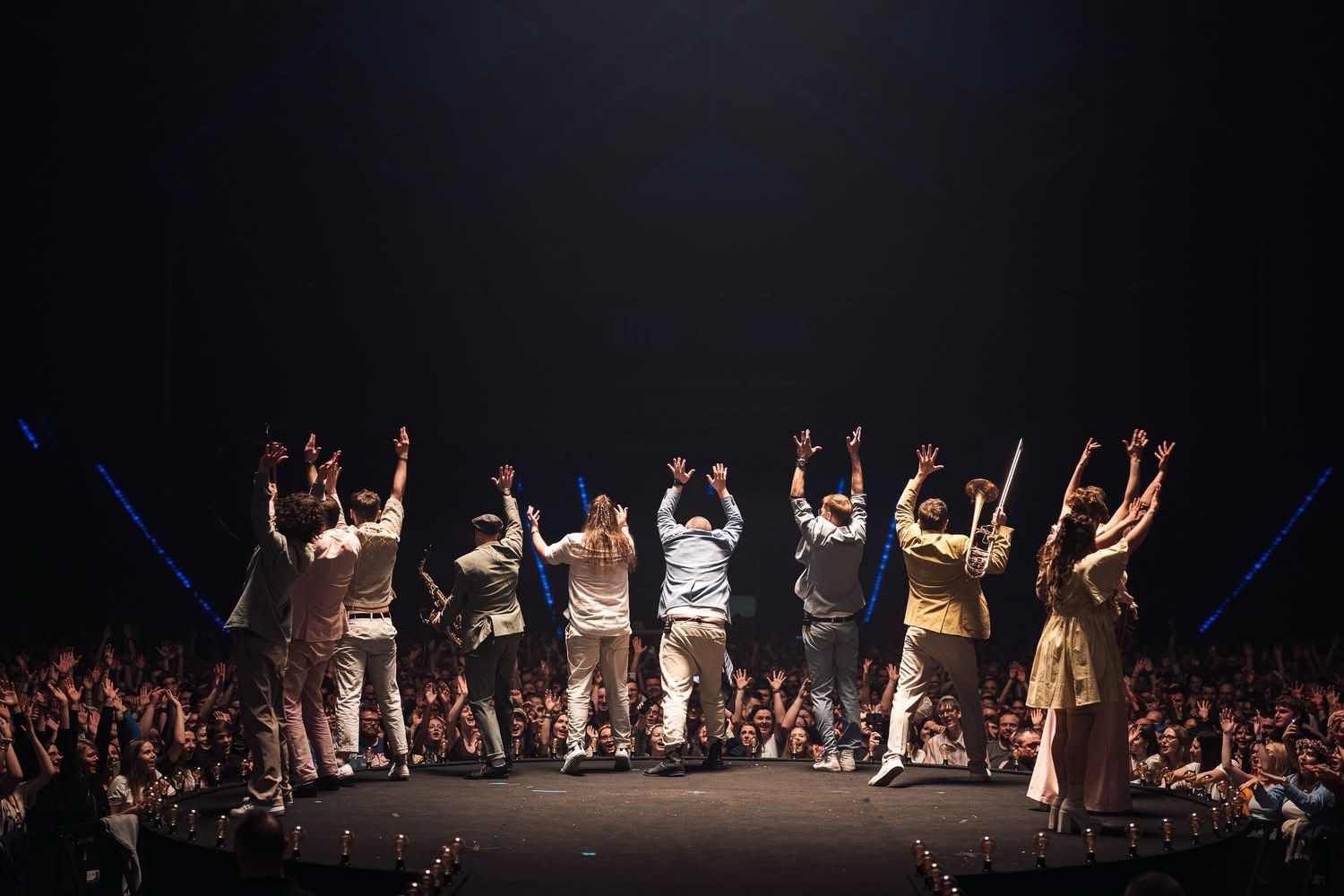
For their encore, Kwiat Jabłoni delivered a triple set so energetic that it’s hard to estimate how many cups of coffee one would need to drink to achieve a similar stimulating effect. First, they played “Byłominęło,” during which the individual band members were introduced. Next came “Zasnąłem na trawniku,” and finally, as a farewell—the song that gave the band its name. As a reminder, “Kwiat Jabłoni” is a composition originally performed by the group Trash Budda, which tells the story of a brand of cheap wine. By this point, even the most reserved audience members were nodding their heads in time to the melody, and total chaos had broken out around the stage with the artists. But that was the whole point—after all, a successful camp has its own rules…
Bartek Król – A lawyer by education, a journalist by profession. He has worked in various roles in the media for over two decades. His greatest passion is travel—he has visited nearly 50 countries so far and can’t wait for his next adventures. He’s lost count of the concerts he’s attended, but there have certainly been “over three hundred.” He listens to albums while running, among other things—he can often be spotted on the trails of Łódź and the surrounding region. He prefers dark and fairly heavy sounds, but he’s also enthusiastic about artists who perform completely different kinds of music.