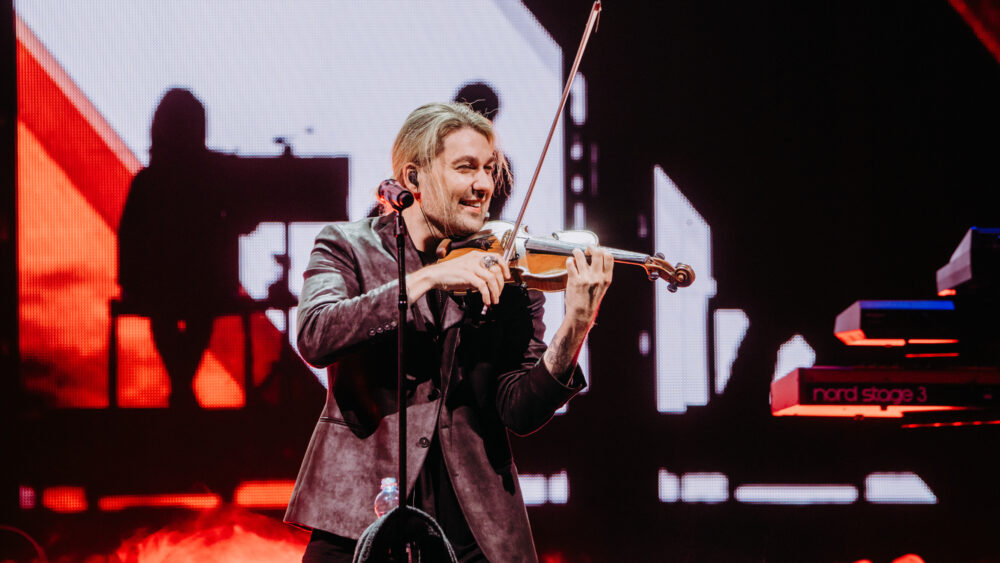
How can you tell if a concert is truly great? Certainly by the fact that, while it’s happening, we completely forget about everything going on outside the stage and the stands. But also by the fact that even as days pass since the performance, we gladly revisit it in our minds and remember every detail perfectly. And that is exactly the case with the show that David Garrett treated us to once again at Atlas Arena in mid-May.
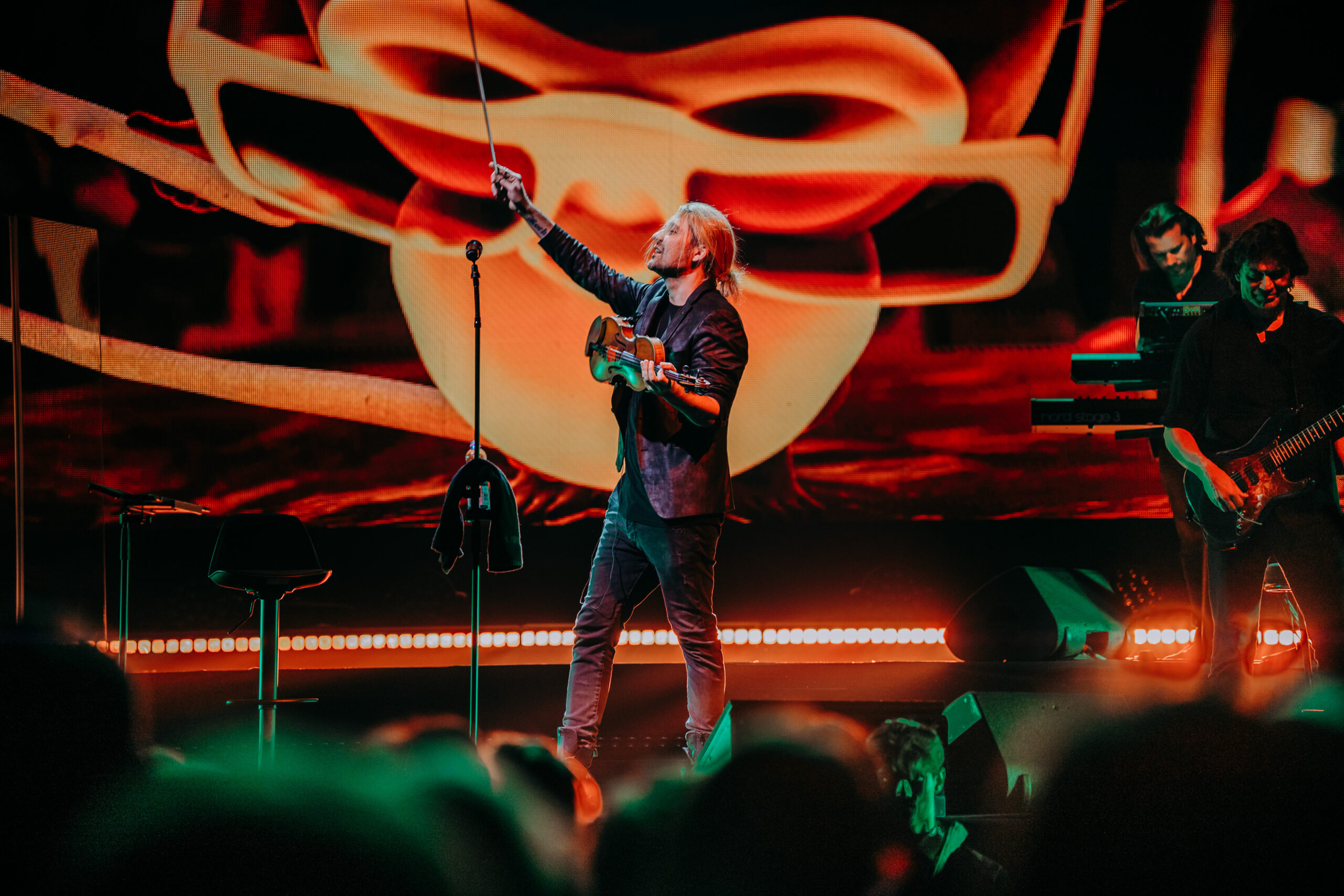
The musician, who is not quite 45 years old, has repeatedly stated in recent interviews that this year’s “Millennium Symphony” tour is a truly special undertaking for him. We heard a similar remark at the start of his performance in Łódź. At the time, we could still have dismissed it as mere courtesy. But as the Aachen-born artist was leaving the stage for good, everyone knew perfectly well that those remarks were not in the least exaggerated. Because even a layman could see that Garrett not only plays with his whole being, but also enjoys with his whole being where he is and what he is doing.
A soccer vibe to start things off
This time, the lights at Atlas Arena went out a few minutes past 8:00 p.m. In their place, strobe lights began to illuminate the arena, and a moment later, the star of the evening appeared on stage. At the same time, rhythms began to fill Atlas Arena—rhythms that are especially familiar to soccer fans. After all, “Seven Nation Army” by The White Stripes is a song very often played in stadiums during matches. Not only that, but in some clubs, distinctive parts of this song even serve as a sort of jingle after a goal is scored. Anyone who has ever watched even one Bayern Munich match knows that such a wall of sound can later carry a crowd of tens of thousands to great heights. And that’s probably why, looking at the setlist, some doubted whether this composition would hold up in a violin arrangement. Completely needlessly, because the song lost none of its edge. What’s more, Garrett and his accompanying band managed to bring out “that extra something” from it.
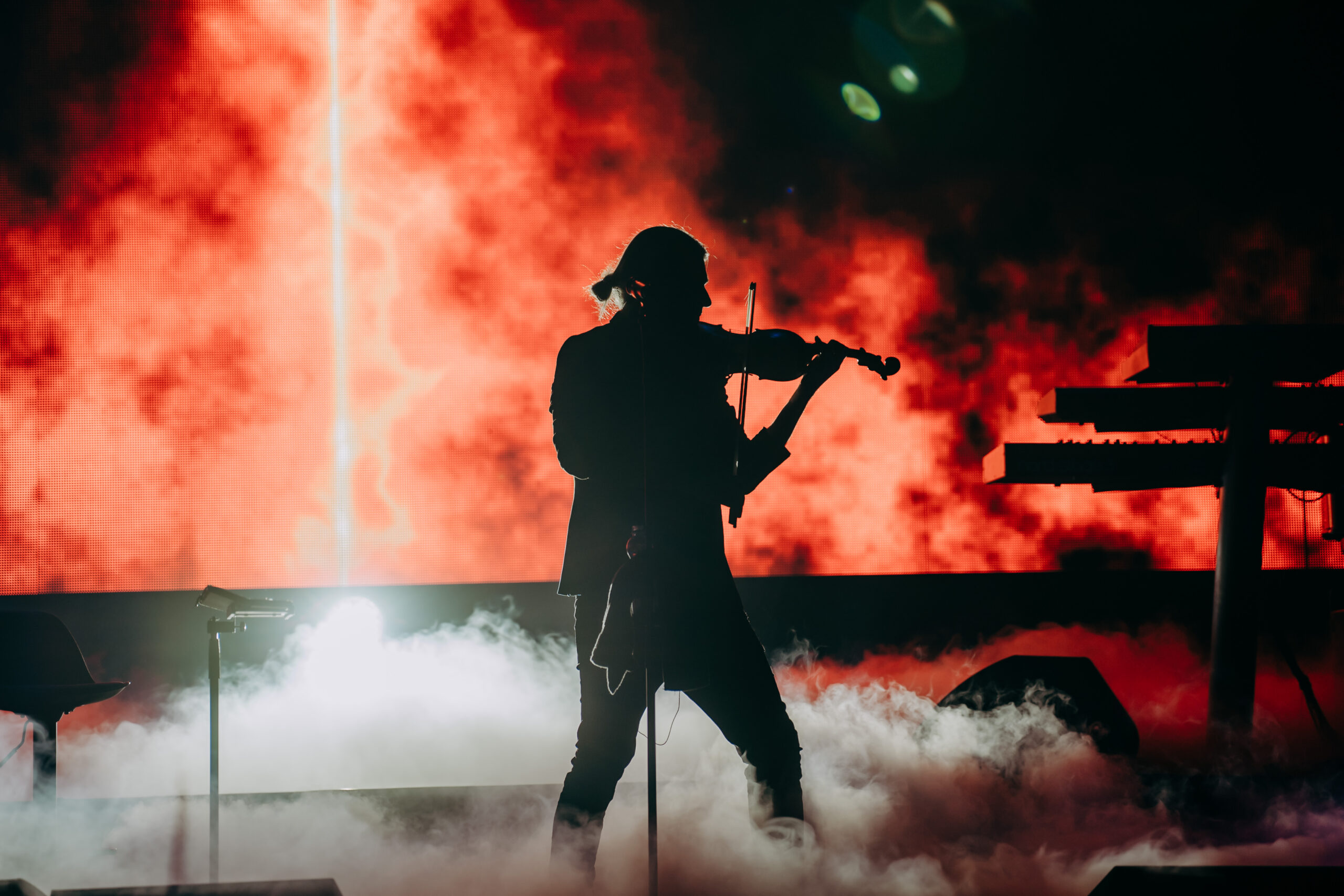
The same could be said, in fact, about “Naughty Girl,” which we heard second, and about the other songs performed that evening. But that is precisely the magic of Garrett, who is like a musical Midas—whatever he touches, he turns to gold. Watching him in action, it takes only a few moments to become convinced that all descriptions such as “one of the most outstanding contemporary violinists,” “the Paganini of pop culture,” or “crossover virtuoso” are entirely accurate and well-deserved. Because simply put, no one else can blend classical music with rock, pop, R&B, and other genres in such a spectacular way.
As befits a champion…
After the song we know from Beyoncé’s original version, it was time for “Moves Like Jagger,” which was made popular at the beginning of the previous decade by the guys from Maroon 5, featuring Christina Aguilera. So, “on the surface,” it’s yet another musical fairy tale, but the end result is the same—a breath of fresh air from the stage, incredible energy, and immense praise for the effortless performance. That’s how it goes when someone’s talent is discovered early on, and then that person dedicates their entire life to developing that gift and reaching new levels of mastery.
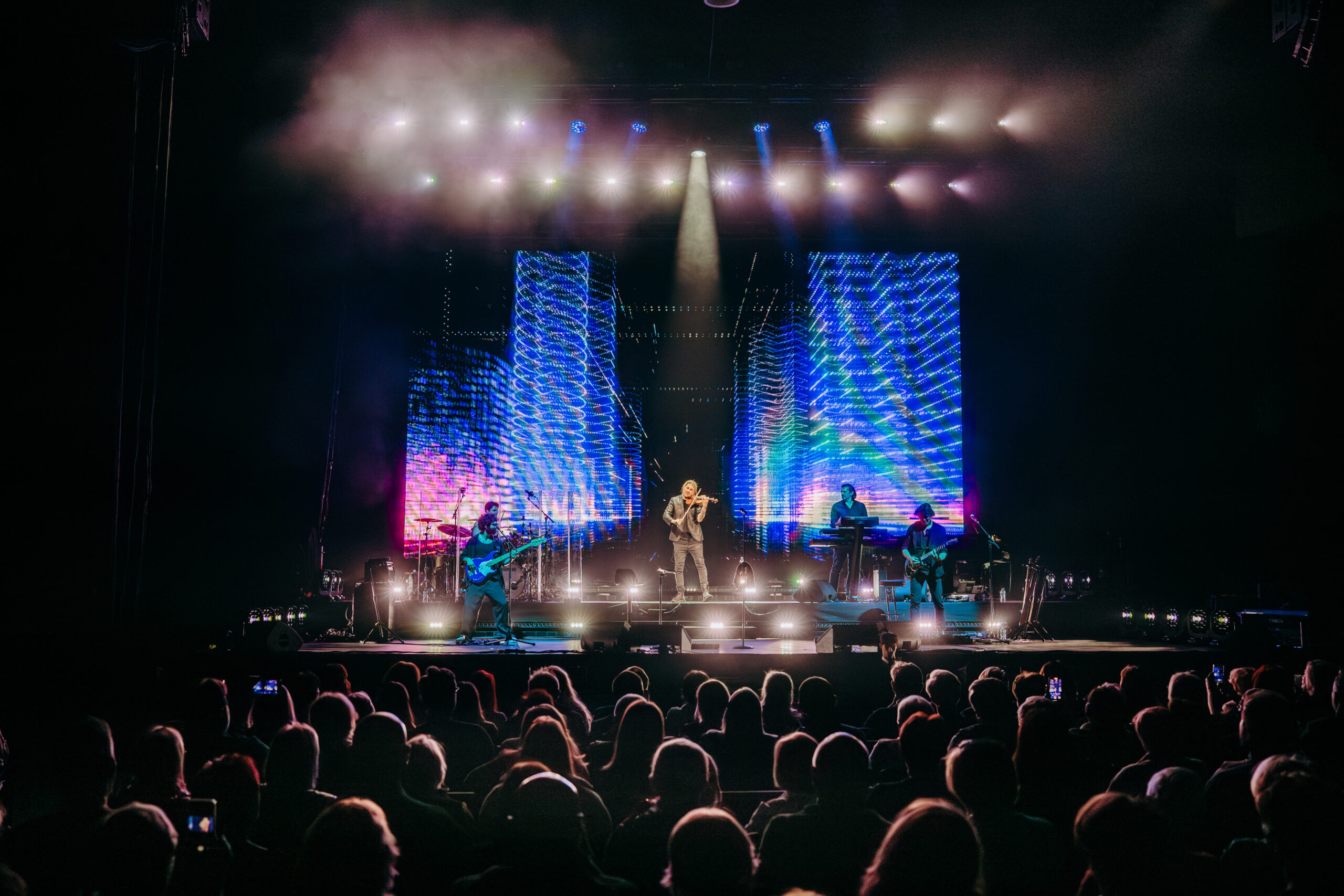
The history of show business is full of cases where teenagers are hailed as “prodigies” in one field or another, but are unable to cope with the pressure and fame. However, this doesn’t apply at all to Garrett, who has American roots—he has no intention of resting on his laurels and constantly surprises us with his ideas. These innovations span both the macro level (as evidenced by nearly a quarter-hundred studio albums) and the micro level. Just take “Senorita,” for example, which was played fourth this past Monday. I’ll bet that even Camila Cabello and Shawn Mendes—the songwriters behind that hit—sighed aloud in admiration when they first heard what the maestro from North Rhine-Westphalia had done with their hit.
A nod to the youngest
One of the things that stood out at Atlas Arena that evening was the sight of a large number of children. Those who made it there were clearly already aware that playing the violin—provided, of course, that one practices regularly—doesn’t have to be boring at all. Garrett has long been an unrivaled ambassador for this art form, and through his achievements he has undoubtedly done more to popularize his beloved instrument than hundreds of the most fascinating music lessons combined, in which the genius of Wieniawski, Paganini, Vivaldi, or Tartini was discussed. After all, how could anyone remain indifferent to someone who can so beautifully play “As It Was”—a hit by the teen idol Harry Styles, formerly of One Direction—with just a bow?
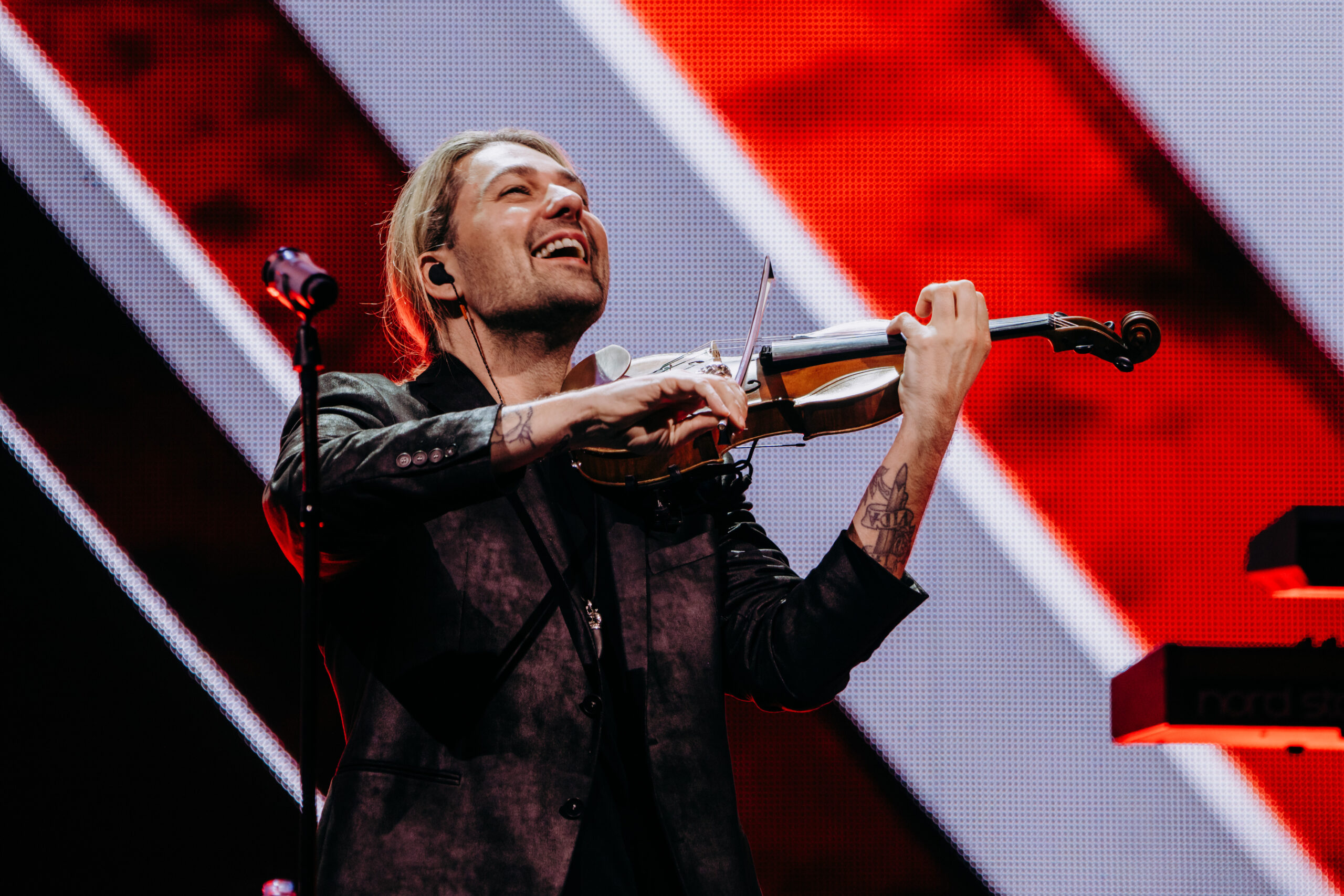
The youngest of the young, who came to the Łódź arena that Monday, will definitely remember the song “Dance Monkey” from the concert. During this song, created just before the pandemic by the artist known as Tones and I, a giant monkey appeared on the big screen, bravely “backing up” Garrett and the other musicians on the drums. Another thing is that the performance itself had such an infectiously positive vibe that it was hard to stay still and not groove along for those three minutes.
Standing ovation
Before the next song, Garrett treated the audience to a brief lecture on the power of the church organ as the greatest polyphonic instrument in classical music. He also mentioned Johann Sebastian Bach, who frequently used the organ when composing his works. This story was by no means coincidental, because moments later, the 45-year-old presented his own version of “Take Me to Church.” And as he himself admitted, he knew from the start that the organ would be the perfect complement to his violin in Hozier’s hit. I can only add that, in my subjective opinion, it was one of the most moving moments of the concert…
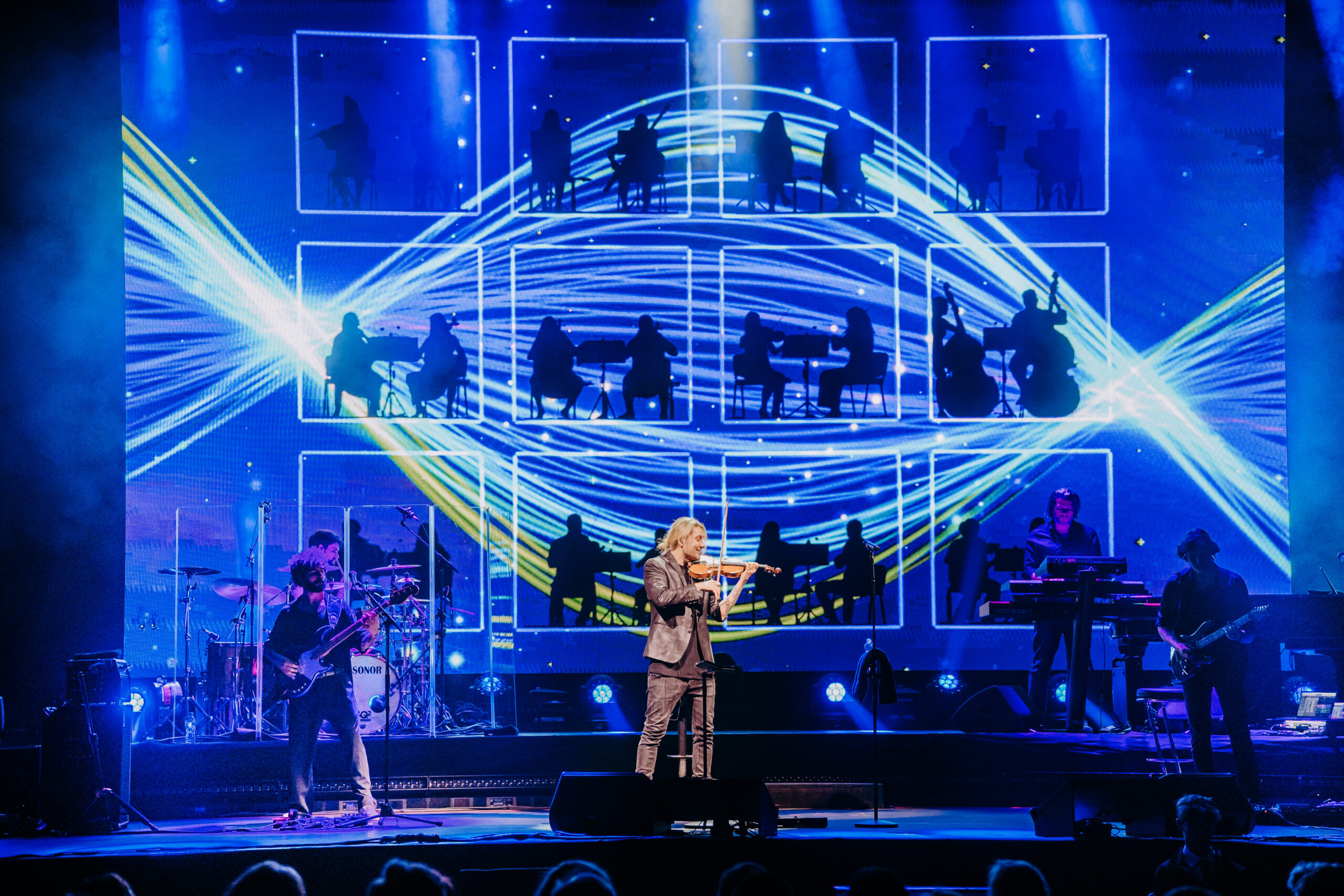
The longer the performance went on, the more Garrett talked about each song. Along with his compositional insights, he often shared his thoughts on the highs and lows of being a musician. For example, before performing “Wake Me Up” by the late Avicii, he spoke about the pressure he felt. It was no coincidence that it was during this song that Garrett encouraged everyone to get up from their seats and, standing—with greater freedom—try to enjoy the moment. And as if by the wave of a magic wand (or a bow?), almost everyone in the Atlas Arena instantly began swaying and clapping rhythmically.
From Rachmaninoff to Paganini
Another hit from the musician, who divides his time between Berlin and New York, was Ed Sheeran’s “The Joker and the Queen.” As we learned, the greatest inspiration for this particular song was the work of the legendary Sergei Rachmaninoff. And what came of this blend? The ballad, enriched with influences from the Russian composer’s music, turned out to be even more nostalgic than the original.
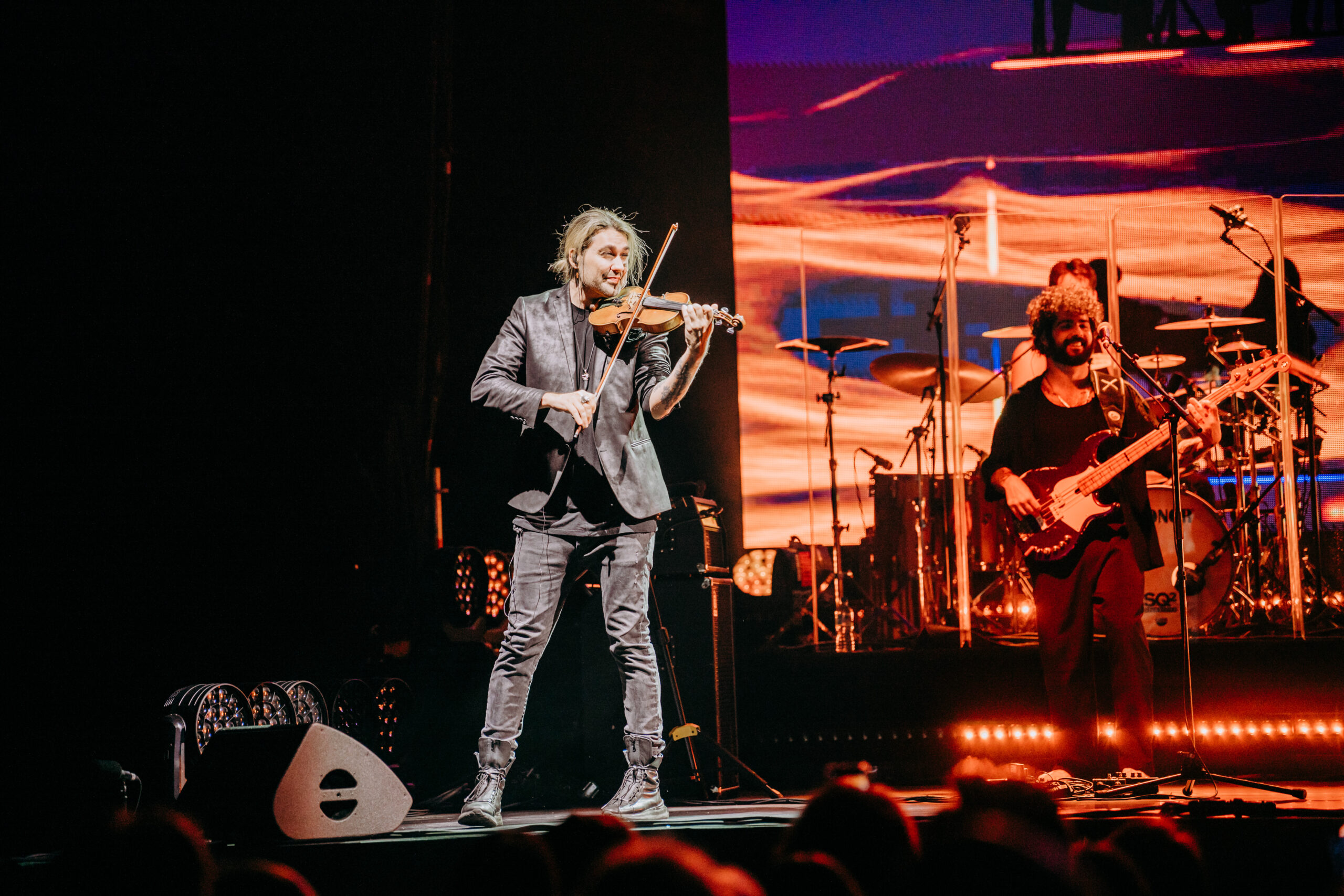
Lusiano Fonsi’s “Despacito,” on the other hand, was inspired by the musical legacy of the aforementioned Paganini. “He himself would have loved to arrange something like this, because he adored blending folk and classical music. He loved adding elements of folk music to the sound of the violin,” Garrett explained, among other things. And he quickly reminded us that while Paganini was best known for his violin playing, he also loved the classical guitar. For this song, Garrett sat down among his stage companions and, once again, as if casually, took us on a unique journey—this time to Latin America.
Great artistry on a small stage
Rammstein’s “Mein Herz brennt” kicked off the second set of ten songs. Before that happened, however, Garrett spoke eloquently about Ludwig van Beethoven and his pianissimo and fortissimo. As one might easily guess, in this composition, the piano was the most important of the accompanying instruments. Oh, it was a real treat—and not just for fans of heavier sounds. And as if that weren’t enough, the motif of fire on the big screen added even more dramatic flair to the performance…
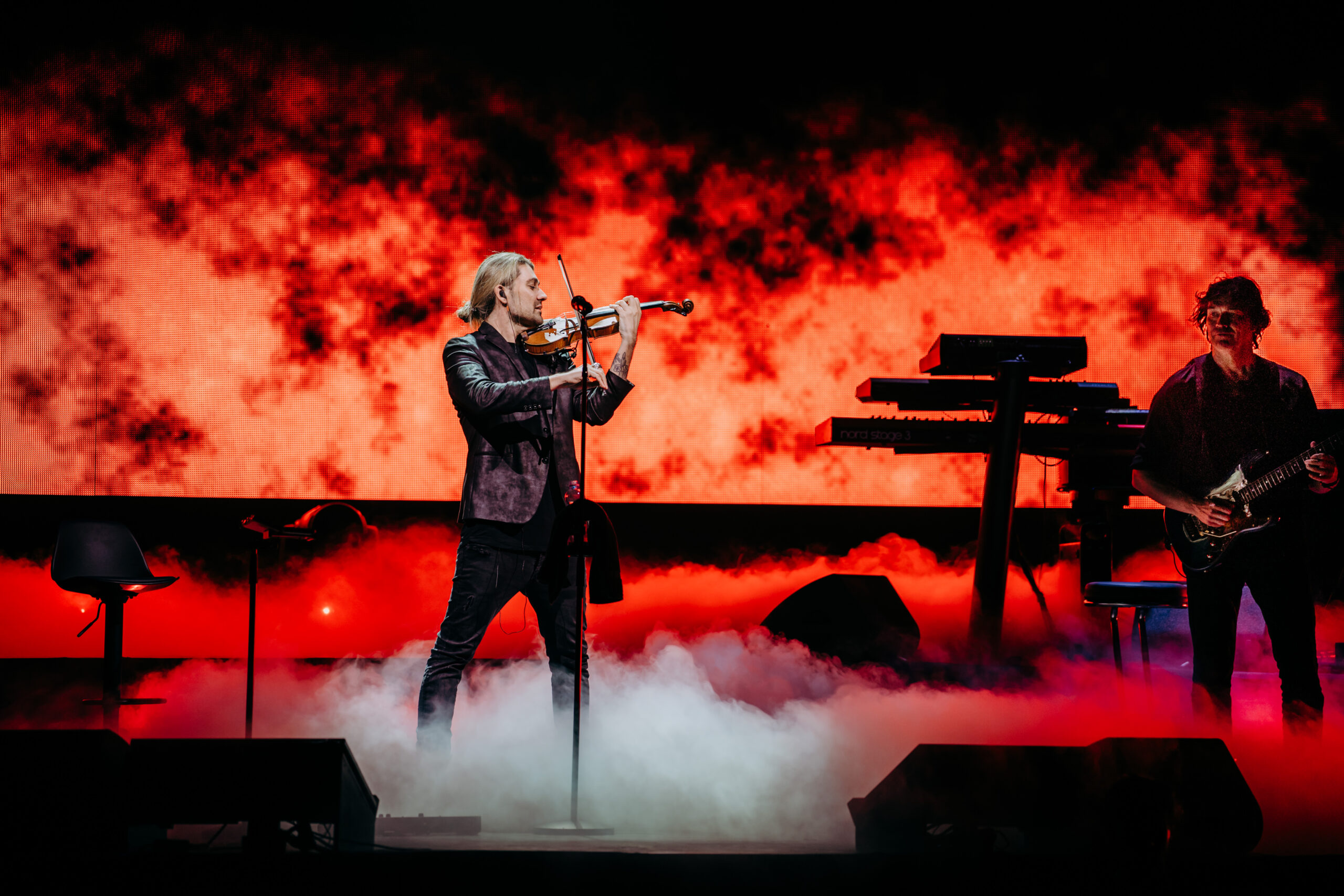
At the very end of the first part of the show, Garrett once again turned to Ed Sheeran’s repertoire. Interestingly, “Shape of You” was performed not on the main stage, but on a small platform located between the stands and the rows of seats on the field. Surrounded by fans on all sides, the German musician took advantage of the situation and invited everyone to sing along to the chorus. Not only did he play the violin brilliantly, but he also kept the beat on a drum machine. A one-man band? As you can see in the attached photo.
A Triumphant Return
The nearly half-hour intermission flew by. Perhaps that’s because, during that time, the big screen showed several “behind-the-scenes” clips featuring the star of the evening. They included not only interesting tidbits about the recording process for individual songs from the new album, but also insights into the logistics of touring and frequent travel around the world. And Garrett returned to the stage with a confident stride as the opening bars of The Weeknd’s “Blinding Lights” began. The lights once again perfectly synced with the music, and the artist himself gave the impression that during those less than thirty minutes, he had already grown quite homesick for his fans and his bandmates on stage. It was definitely a powerful opening to the second part of the show!
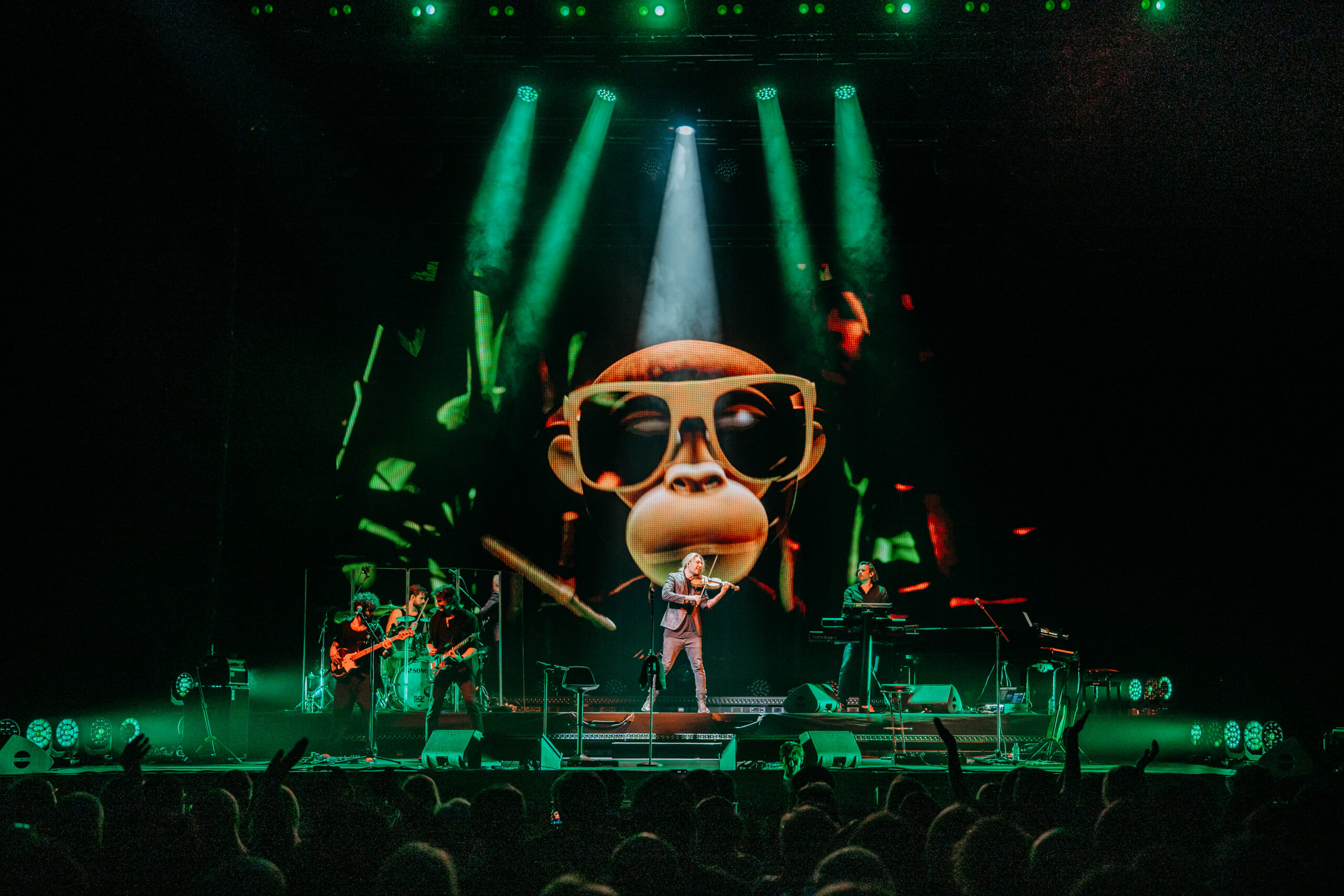
Rihanna’s “Russian Roulette” began with an intro filled with unease, and from then on, Garrett masterfully sustained that unique sense of tension through the melody until the very end. This feeling allowed the audience to immerse themselves even more deeply in the song’s atmosphere and experience it chord by chord. The mood in the Atlas Arena was further heightened at that moment by a powerful blue light that spread from the stage across the venue.
Tips from an expert
Before Garrett announced the next song, he reminded everyone of a basic rule that applies especially to musicians and athletes, though it really applies to all activities. “Remember, practice makes perfect. You have to practice, practice, and practice some more.” “Believe me, even for me, not everything is easy,” he insisted. And right after that, he invited the audience to an—as he put it—“epic version” of Destiny’s Child’s “Survivor.” And indeed, paired with perfectly synchronized lighting and visuals on the big screen, the whole performance made a fantastic impression.

Next, we heard “The Loneliest,” originally recorded by Maneskin, the Eurovision winner from four years ago. As is usually the case with such ballads, a red glow took over the stage, “pierced” by the lights of smartphone flashlights. This time, Garrett didn’t walk around the stage, standing by the piano accompanying him for the entire song. The master’s intense focus rubbed off on the audience, who—as if hypnotized—stared without interruption for the entire four minutes at the face and hands of their idol, moving with extraordinary grace.
The perfect mix
When another round of thunderous applause died down at Atlas Arena, the German virtuoso introduced his band and warmly thanked them. He then turned to the audience to express his gratitude, and announced something that, in the unanimous opinion of those gathered, turned out to be the highlight of the show. Photos from Garrett’s private archive played on the big screen, while he himself gave a daring performance of excerpts from Nirvana’s “Smells Like Teen Spirit,” Aerosmith’s “Walk This Way,” Michael Jackson’s “Smooth Criminal,” Beethoven’s “Symphony No. 5,” and “He’s a Pirate,” the theme song from the movie “Pirates of the Caribbean.” Ten minutes at full throttle, including seamless transitions between completely different styles, resulted in an intense experience, for which the audience rewarded him with a standing ovation.
The next song—David Guetta and Sia’s “Titanium”—also left a lasting impression. From the very start, the audience clapped along to the beat, and after just a few dozen seconds, Garrett stepped off the stage and began making his way through the arena. It was as if he wanted to show every single person in the Atlas Arena up close what he could do and that it gave him a joy that was almost impossible to describe. It’s no surprise that phones started coming out then, and tons of people tried to take a selfie with the artist walking through the arena or asked someone standing next to them for a photo. A priceless souvenir was literally within arm’s reach…
Łódź's magnet
By the time the main setlist reached its finale, no one in the audience was sitting down anymore. Taylor Swift’s “Shake It Off” turned up the heat even more in the Łódź arena and served as a fitting culmination to the second half of the performance by the musician hailing from just across our western border. The enthusiastic audience clearly had a magnetic effect on Garrett, so he decided once again to take a stroll among the crowd to a mini-stage located right next to the sound booth. And when he returned to the main stage, he delighted the audience by performing a lively dance routine with the guitarist. All of this, of course, with his violin in hand and while playing. Well, such images don’t quite fit the stereotype of a sedate violinist meticulously coaxing every note from his instrument. But you only need to visit his profile on any social media platform to realize that for David Garrett, such antics while performing are nothing out of the ordinary!
And though no one was in a hurry to leave, the moment of farewell was inevitably approaching. For the first encore, the German violinist performed My Chemical Romance’s “Welcome to the Black Parade” with his characteristic finesse. But earlier, for the nth time that evening, he showed that he cared deeply about being as close as possible to the audience and invited all the guests from the floor to “ditch” their chairs and come right up to the stage. “I’m convinced security won’t be able to stop everyone on the way,” he joked, while stipulating that the stage itself should, however, be left only for him and his people. Performed just above the crowd, the piece sounded very majestic, and the composers from various countries—who have long been part of the “extraterrestrial orchestra” and whom Garrett referenced throughout the evening (including Frédéric Chopin, whose name was also mentioned from the stage)—could only be bursting with pride that they had lived to see such an outstanding successor.
The last hit we heard that day was “Viva la Vida” by Coldplay. This track by the British band is a unique collection of musical reflections on human life, which has become a sort of anthem for many. David Garrett’s version also sent shivers down our spines. And just like that, his original overview of what has been created across various musical genres over the past quarter-century—lasting over two hours—came to an end. While everyone was already quite familiar with each of the presented songs, thanks to Garrett’s mastery, one could hear something new in each one and notice entirely fresh aspects. Being able to take part in this was pure pleasure!
Bartek Król – A lawyer by education, a journalist by profession. He has worked in various roles in the media for over two decades. His greatest passion is travel—he has visited nearly 50 countries so far and can’t wait for his next adventures. He’s lost count of the concerts he’s attended, but there have certainly been “over three hundred.” He listens to albums while running, among other things—he can often be spotted on the trails of Łódź and the surrounding region. He prefers dark and fairly heavy sounds, but he’s also enthusiastic about artists who perform completely different kinds of music.