The year 2025 proved to be a turning point for Łódź. The city welcomed 5.1 million visitors, setting a historic record and sending a clear signal that Łódź has firmly established itself among Poland’s top tourist destinations. Three key “drivers” are behind this result: spectacular mass events, strong city break offerings, and the steadily growing MICE business tourism sector.
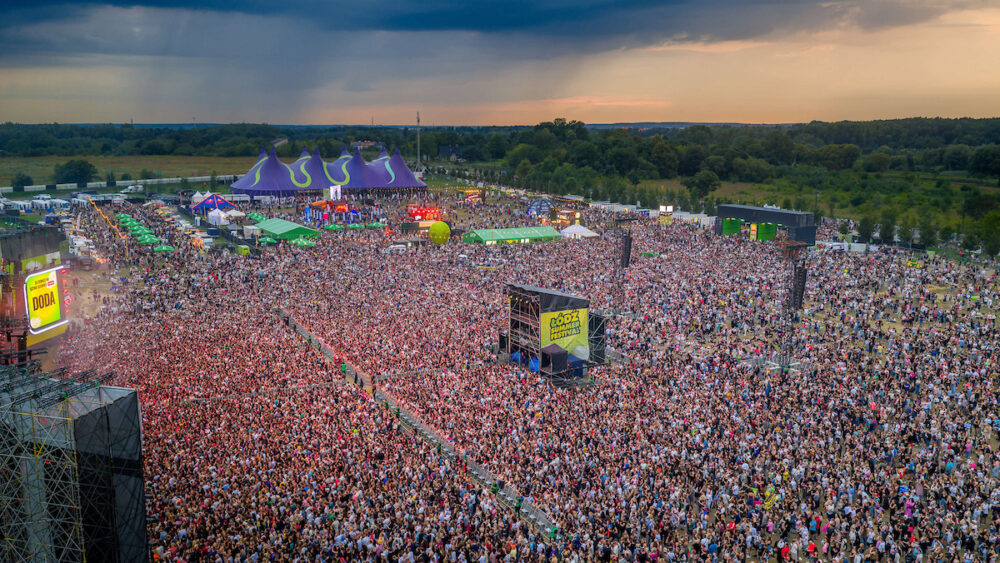
Events that attract hundreds of thousands of visitors
Major events such as the Łódź Summer Festival, Audioriver, and the Light Move Festival help build the city’s profile and recognition both domestically and internationally. These are projects with significant potential for long-term success—they are firmly established in the calendar, grow year after year, and attract audiences not only from the region but from all over Poland and Europe.
The second pillar consists of urban “family magnets” and city break attractions: the Łódź Zoo’s Orientarium, the Fala Water Park, Manufaktura, and Piotrkowska Street. These are the main drivers behind the dynamic growth of the short weekend stay segment.
The third "driver" is MICE—conferences, conventions, and industry events—held in venues such as EXPO spaces and revitalized former industrial sites. This segment not only generates higher per-person spending but also helps stabilize visitor numbers during the off-season.
“5.1 million visitors is no coincidence. It is the result of a deliberate strategy based on large-scale events, strong family-oriented offerings, and consistent development of the MICE sector,” says Tomasz Koralewski, president of the Łódź Tourist Organization.
Traffic trends: the overnight and international segments are growing
Although 77% of visitors are still day-trippers from Poland, the key trend is clear: the overnight segment is growing by 12.5% year-over-year, and the international segment by as much as 22%. The fastest-growing groups are city break tourists (ages 25–44) and attendees of industry events. This growth is also reflected in the length of stay and the average per capita budget.
It is in extending the length of stays that Łódź sees the greatest economic potential. An extra night translates directly into revenue for hotels, restaurants,
culture, trade, and transportation. Based solely on official Eurostat data, it can be estimated that tourists contribute nearly 2 billion zlotys to the city’s budget,” adds Koralewski.
The Central Statistical Office vs. Real-Life Experiences
A 2025 report by the Central Statistical Office (GUS) indicates that Łódź is relatively less attractive than other cities. The source of this discrepancy lies in the methodology—the GUS measures static resources: the presence of UNESCO World Heritage sites, national parks, and access to the sea. Łódź, on the other hand, comes out on top in the category of experiences.
The city offers authenticity, an industrial atmosphere, and revitalized post-industrial spaces that are difficult to capture using traditional metrics. Spaces such as EC1 Łódź – City of Culture, Księży Młyn, and OFF Piotrkowska create a unique “industrial vibe” that is increasingly appreciated by younger generations of tourists.
“The Central Statistical Office measures resources; we measure emotions and experiences. Łódź doesn’t compete on the basis of its waterfront, but rather on its authenticity and atmosphere, which are hard to replicate,” says the president of the Łódź Tourist Organization.
Strategy 2026: Extend stays, strengthen the MICE sector, expand internationally
The Łódź Tourist Organization focuses its promotional efforts on the following markets: the United Kingdom, Germany, the Czech Republic, Italy, Belgium, and the Netherlands. Overseas campaigns build the city’s image as “undiscovered & cool,” while in Poland, Łódź is positioned as a full-fledged city break destination with a packed calendar of events.
The new tool will be the Łódź Meeting Fund—a support mechanism for MICE event organizers (minimum 100 participants, minimum 2 days, collaboration with local companies). Another important step will be the first edition of the Effect MICE Festival (April 21, 2026, EXPO Hall), which will bring the meetings industry together.
Tourism as a Real Driver of the Economy
Today, tourism has a direct impact on the hotel industry, the restaurant sector, retail, the cultural sector, transportation, and event services. Growth in the overnight stay segment translates to higher tax revenues and new jobs. Every additional day of stay acts as an economic multiplier for local businesses.
Unlock access
In the coming years, the full opening of the cross-city tunnel will be of crucial importance, as it will improve rail connectivity, including international rail links. Next on the agenda is the construction of the Central Poland Airport (CPK), which will eliminate constraints on air accessibility.
Łódź is already preparing for an increase in international traffic—most foreign visitors come from Germany, the United Kingdom, the Czech Republic, and Italy. The dynamic growth from these markets confirms the effectiveness of the chosen strategy.
The year 2025 demonstrated that Łódź is no longer a “city in the making,” but a mature tourist destination. The next step is to increase the economic value of each visit—through longer stays, higher-quality services, and the consistent development of the city’s brand as a destination for experiences.