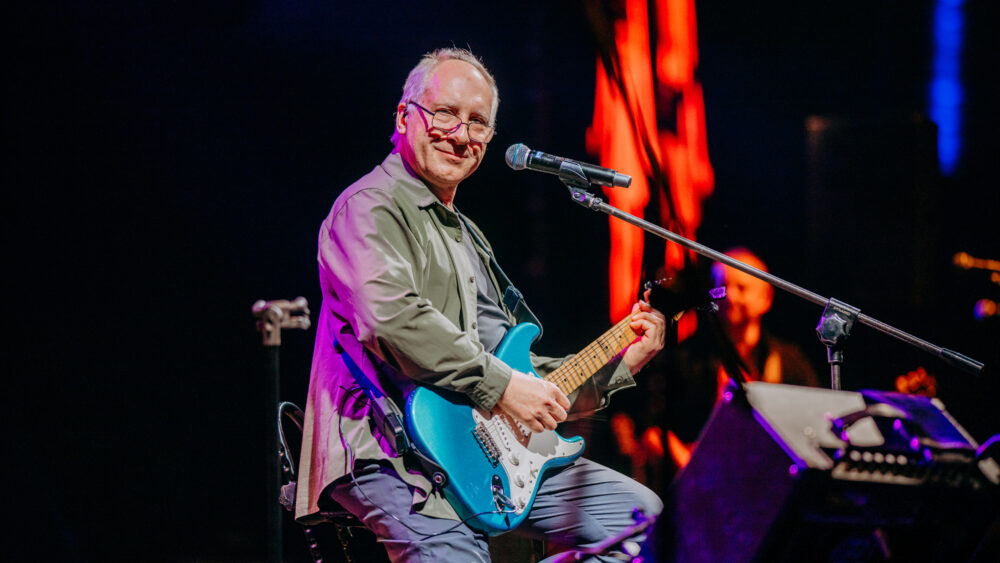
Elektryczne Gitary’s concerts are like journeys into a world where irony meets nostalgia, and the pulse of rock blends with a warm smile at the absurdity of everyday life. On Saturday evening, we had the chance to experience this once again during the band’s performance at Atlas Arena. After an hour-and-a-half-long show, we can honestly say that despite the passing of the years, the band still has the power to transform the end of an ordinary autumn day into a spectacle filled with intelligent lyrics and catchy melodies.
Well-known songs
Elektryczne Gitary is the kind of band you simply can’t help but like. After all, how could you not like someone who can weave such brilliant reflections on the reality around us in such a uniquely melodic way? What’s more, although nearly four decades have passed since the band’s debut at the turn of the 1980s and 1990s, their lyrics remain incredibly relevant. And the audience—as was also easy to observe in the Łódź arena—easily identifies with them and sings along enthusiastically. Another thing is that you don’t even have to be a die-hard fan to know the repertoire of this Warsaw-based band inside out—despite new artists emerging every season, radio stations still love to play Elektryczne Gitary’s hits.
At Atlas Arena—just like at the other concerts on the “W Cieniu Sufitów” tour—we were treated to a set of their greatest hits, interspersed with humorous introductions by Kuba Sienkiewicz. It started with “Wytrąciłaś,” one of the hits from the band’s debut album, “Wielka radość.” Even in this song, there was a hint of what awaited us until the end of the concert: bold, at times playful experiments with arrangements and showcases by individual instrumentalists. It must be emphasized that the saxophone, skillfully “overseeing” by Aleksander Kornecki, did a particularly great job. A backing vocal group consisting of two young singers—Julia and Marta—also contributed to the refreshed sound of the presented songs. “We’re pleased to note that our lineup is growing. It’s a very nice situation,” the band’s leader emphasized after one of the songs.
A very important inquiry
Following “a drama about a difficult interpersonal relationship”—as Kuba Sienkiewicz summed up the inaugural issue—it was time to delve into issues concerning gravity. Contrary to the title, during “Przewróciło się,” fortunately no one in the audience empirically tested the hardness of the floor at Atlas Arena with their head. Instead, one could already observe increased swaying among the audience members present. Feet, even in the stands, moved rhythmically during the next song—“Co powie Ryba”—which we will always associate with the comedy “Kilerzy 2” and the late Jerzy Stuhr’s brilliant performance (which the singer himself also mentioned from the stage).
Later came the moment to try, both collectively and individually, to answer the fundamental questions: “What am I doing here? What are you doing here?” It was great fun, and I’d bet that in the days that followed, that phrase kept popping into the concertgoers’ minds even more often than usual during various situations, such as at work. It’s worth noting that the undisputed highlight of Saturday’s performance of this song was a spectacular guitar solo that even musicians who usually play much heavier, harder music would be proud of.
The next song Elektryczne Gitary treated us to was “Jestem z miasta.” “It’s hard to say what the songwriter had in mind when he wrote this song. But even years later, it’s still fun to sing, so we keep playing it,” Kuba Sienkiewicz admitted with disarming honesty. And the audience? Well, once again, they reacted very enthusiastically and loudly supported the artist. It’s worth noting—not just during the chorus. But then again, the theme of this year’s tour didn’t come out of nowhere either…
The two of them
Later in the concert, the first guest took the stage. As it happens, in Łódź, Michał Wiśniewski hardly needed any introduction. The frontman of Ich Troje, performing a duet with Sienkiewicz, first delivered the song “Cztery Piweczka” from his band’s repertoire with his characteristic flair. A moment later, we heard another song about drinking—this time from the repertoire of Elektryczne Gitary. I’m talking, of course, about “Nie pij Piotrek.” In the meantime, the two vocalists exchanged a playful banter about being pioneers in singing in German. And for the record, it’s worth noting that the collaboration between these two figures, so deserving of Polish music, turned out to be at least entertaining—that is… exactly as expected. You may not be a fan of Michał Wiśniewski in many respects, but you have to give him credit: in terms of stage charisma, he remains in a league of his own in Poland. And his characteristic hoarseness is surely still the envy of many in the younger generation who dream of making it big on the domestic music scene.
After “The Man with Red Hair” at Atlas Arena, the iconic “Man with a Leaf” got his moment in the spotlight. This song takes on an extra dimension in the fall, so the atmosphere during the performance felt even more special. An excellent transverse flute solo also added its own touch… After this unique bus ride around the Palace of Culture, the atmosphere once again—as befits Łódź—became thoroughly cinematic. The Elektryczne Gitary crew energetically performed “Nie jestem sobą,” another track from the soundtrack to “Kiler 2.”
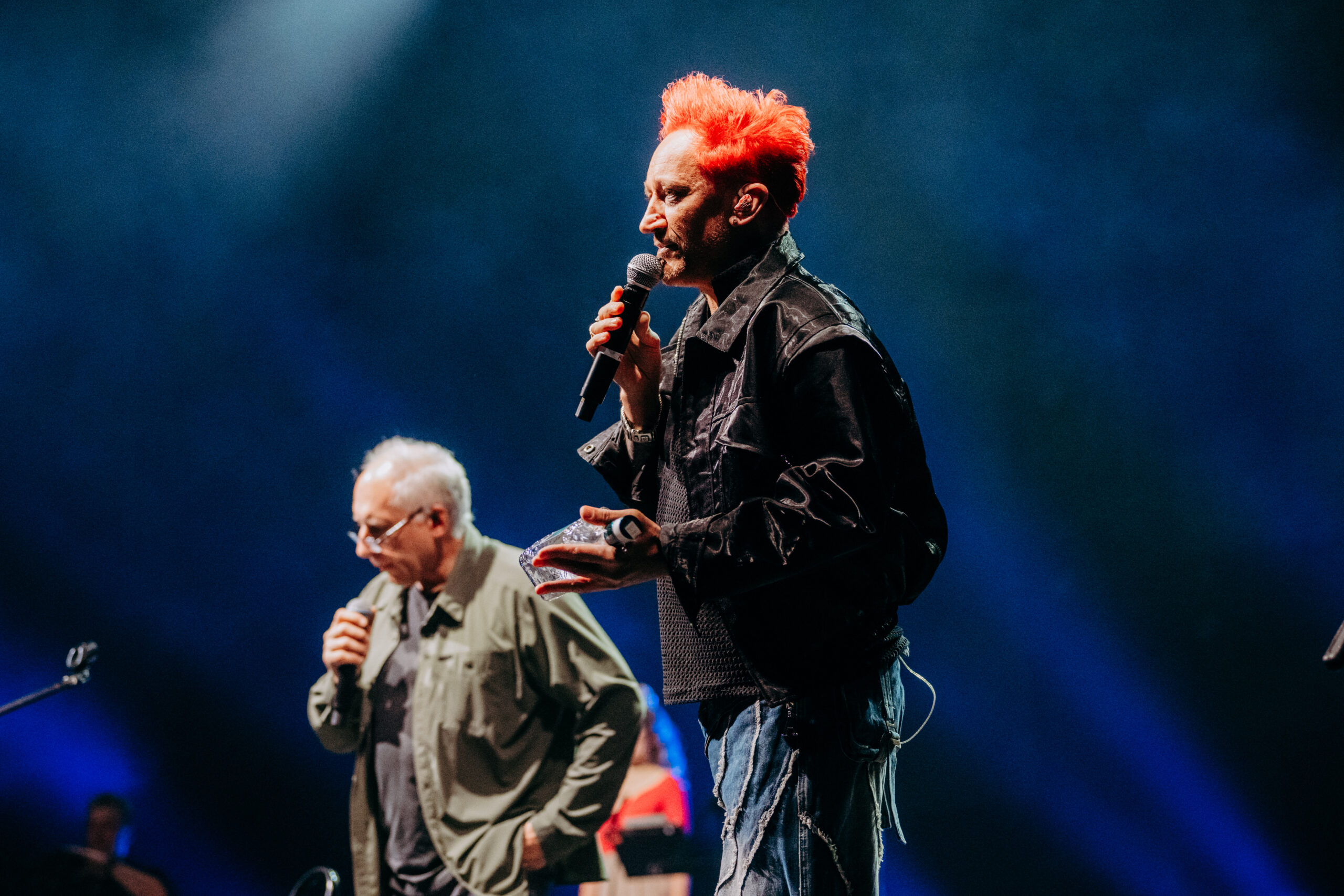
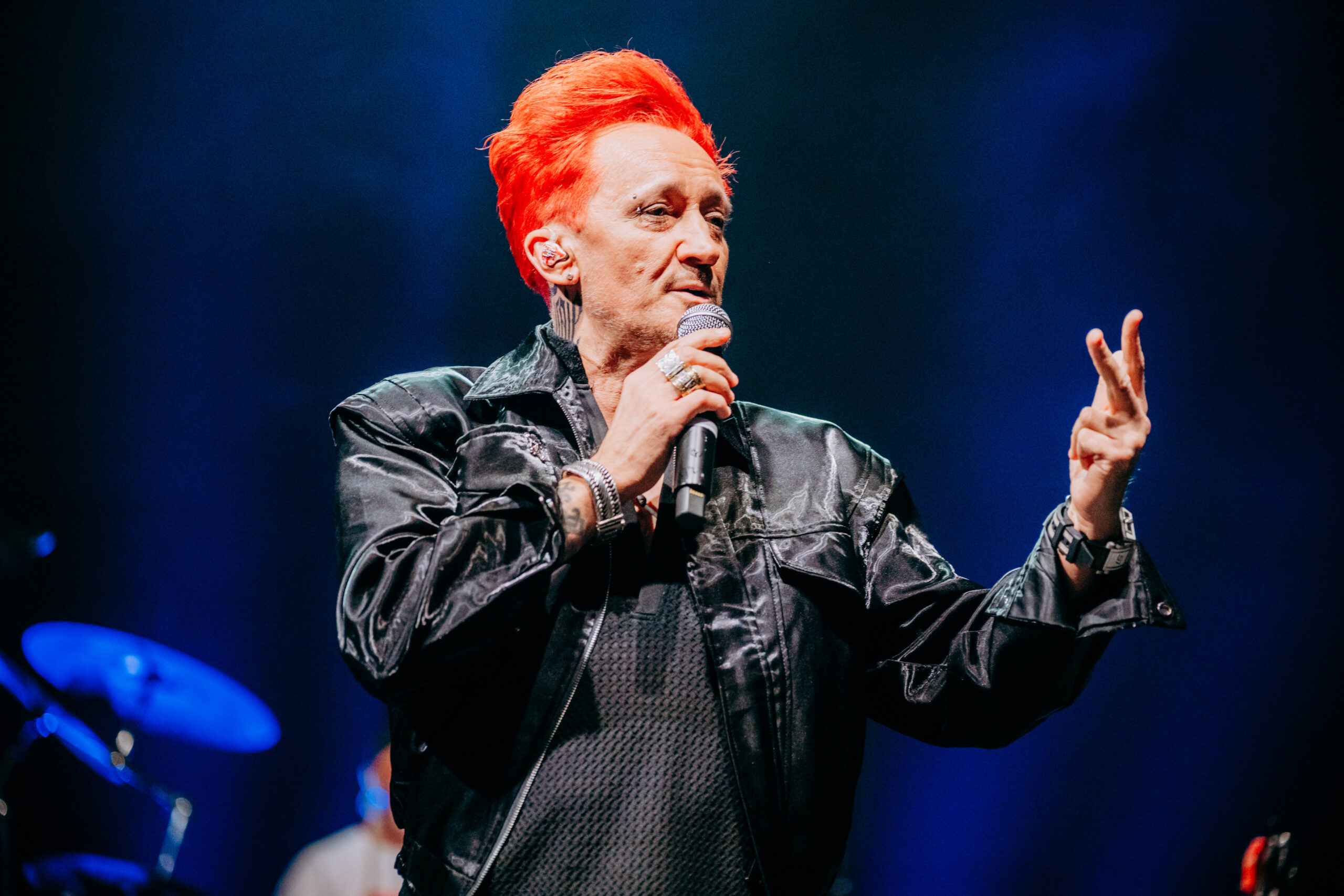

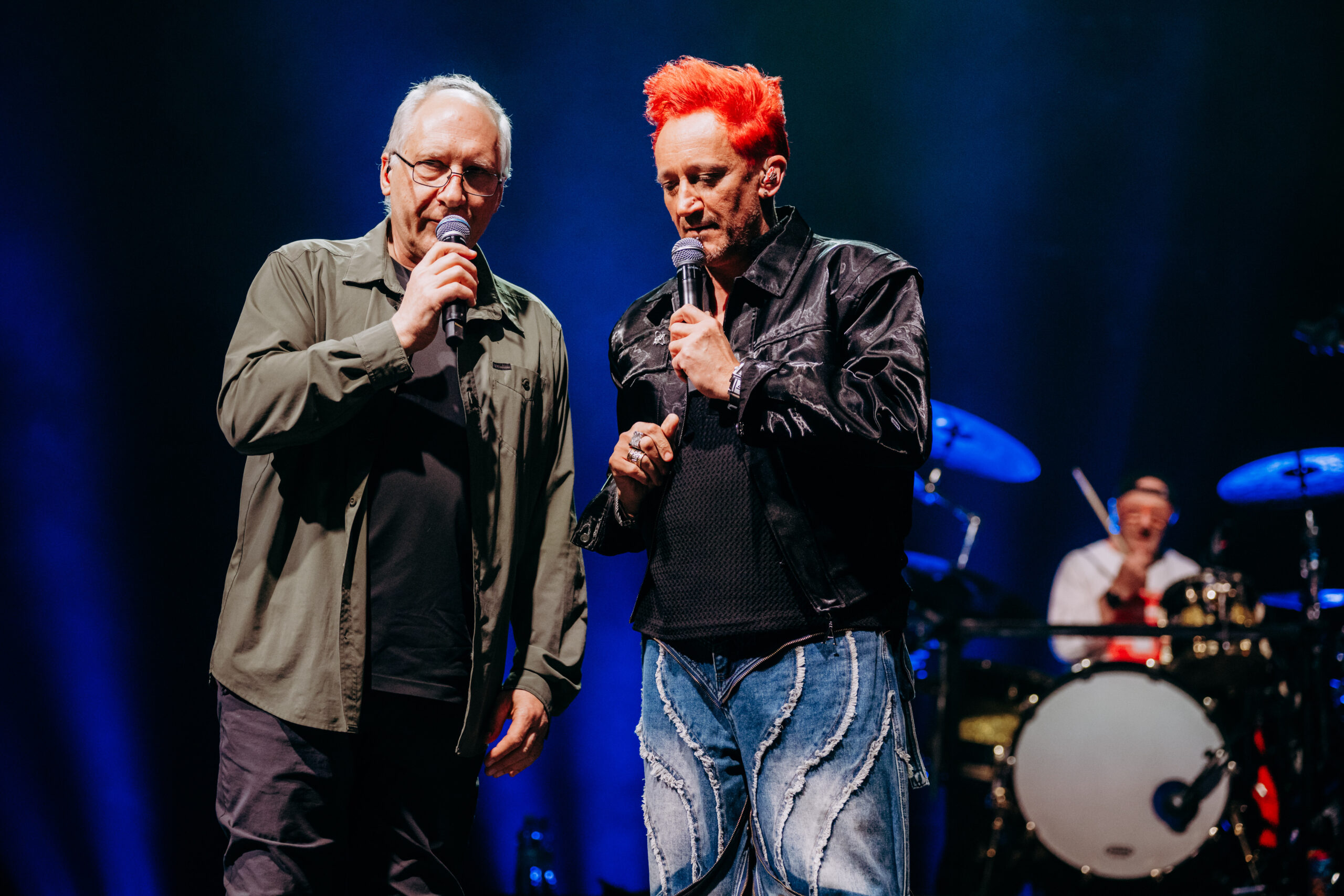

Photo: Radoslaw Zydowicz
Beautiful and… a doctor
The subtle mockery of the realities of life that have accompanied us for years was in full swing against a musically original backdrop, until, before we knew it… “The End” came. Fortunately, this wasn’t the end of the entire concert, but rather a song whose opening bars have, since the early ’90s, heralded—usually in the middle of the night—the conclusion of all kinds of parties and social gatherings. Personally, I really enjoyed the bluesy interpretation the band treated us to on Saturday.
If we consider Elektryczne Gitary’s performance in Łódź to be a musical book brimming with experiences, then Kuba Sienkiewicz wrote its subsequent chapters in collaboration with another guest he had invited. This time, for a change, it was the voice of the younger generation—and a female voice at that. With a radiant smile, Roksana Węgiel, also known for some time as Roxie, took the stage. The winner of Junior Eurovision seven years ago was—or at least gave that impression—clearly honored to be appearing that day alongside Sienkiewicz, one of the most recognizable not only Polish musicians, but also… neurologists.
At times she even seemed a little flustered, repeatedly thanking everyone for the invitation, but when it came time to sing, she showed what she was capable of. First, together with the event’s host, she gave a lively performance of the “hippie song” “Włosy,” and then she performed her latest single, “Błękit,” on her own. I’m no expert on the work of this 20-year-old from Jasło, but I appreciate that the version of the song from Atlas Arena sounded completely different—more feisty—than the one on the radio. We also got to hear and see the 2018 winner of *The Voice Kids* in action during her second duet with Kuba Sienkiewicz. The two performed “Dzieci,” and in my opinion, their vocal collaboration held up very well—though here, too, the arrangement differed from the one we’re all familiar with from the radio.
Political Update
After Roxie left the stage, we were treated to some electric guitar classics at Atlas Arena. To their credit, however, the band made sure to stay current, and by the end of the song, “Lenin’s Heads”—both in the lyrics and on the video screen—had become “Putin’s Heads.” The audience took careful note of this and greeted it with applause… After one of the oldest songs in their entire repertoire, Sienkiewicz and company reached for one of their newest songs for a change. It was clear that “Najwyższa pora,” which deals with ecology and natural resources, initially posed a bit of a challenge for the singing audience, but this didn’t last long, and by the end, the successive choruses were already being cheerfully hummed by nearly everyone in the audience.
Once the discussion about natural resources had wrapped up, the show smoothly transitioned into the next legendary hit. “Wszystko ch.”, punctuated by a fantastic guitar solo, sounded as if a group of rebellious teenagers were taking the stage, rather than a group of sedate gentlemen in their 60s. What’s more, for many attendees of Saturday’s concert, this surely brought back memories straight out of punk festivals. And “Żądza,” played right after that, wasn’t exactly in a much calmer style… The only moment of respite came when Kuba Sienkiewicz introduced all the musicians supporting him on stage.
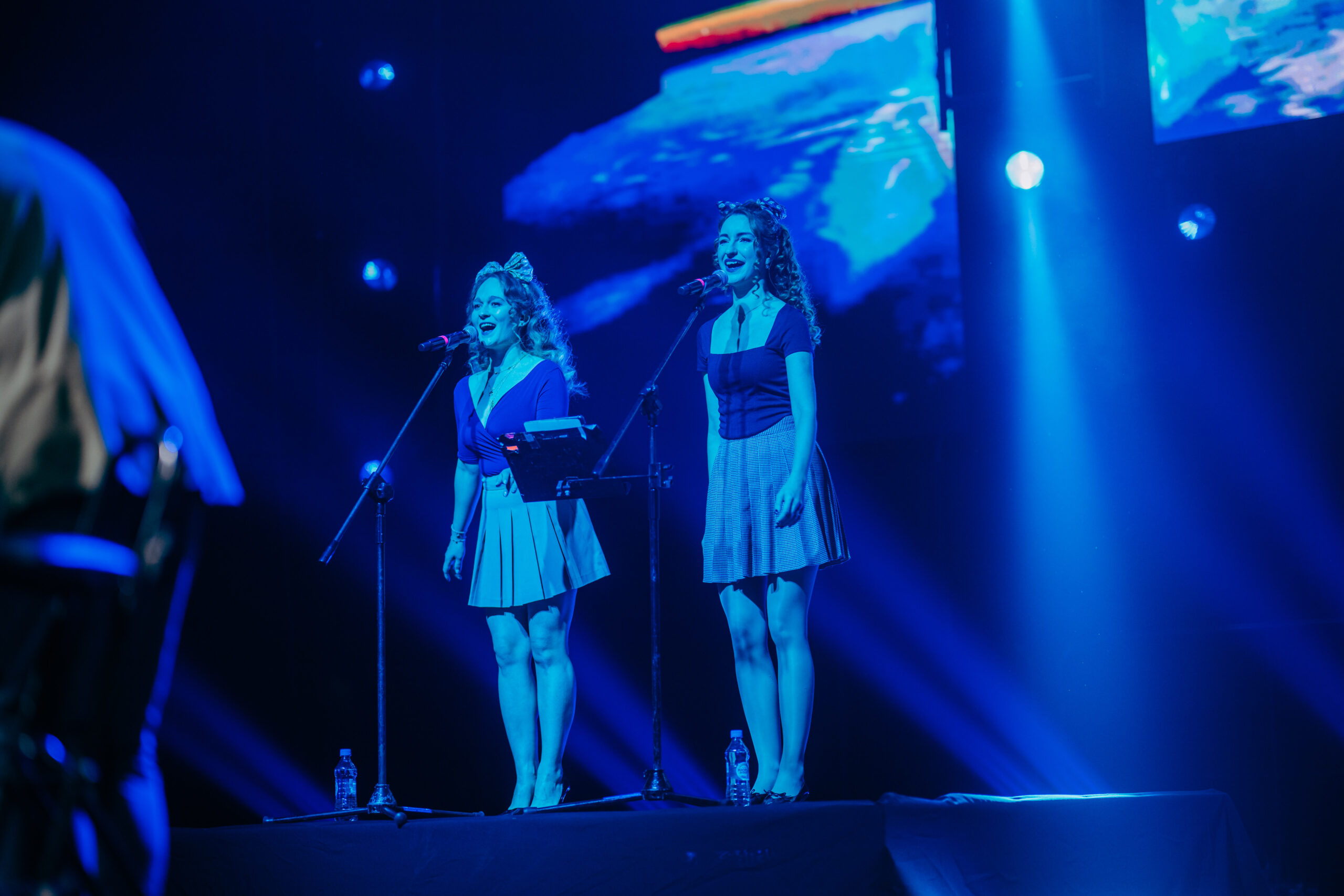
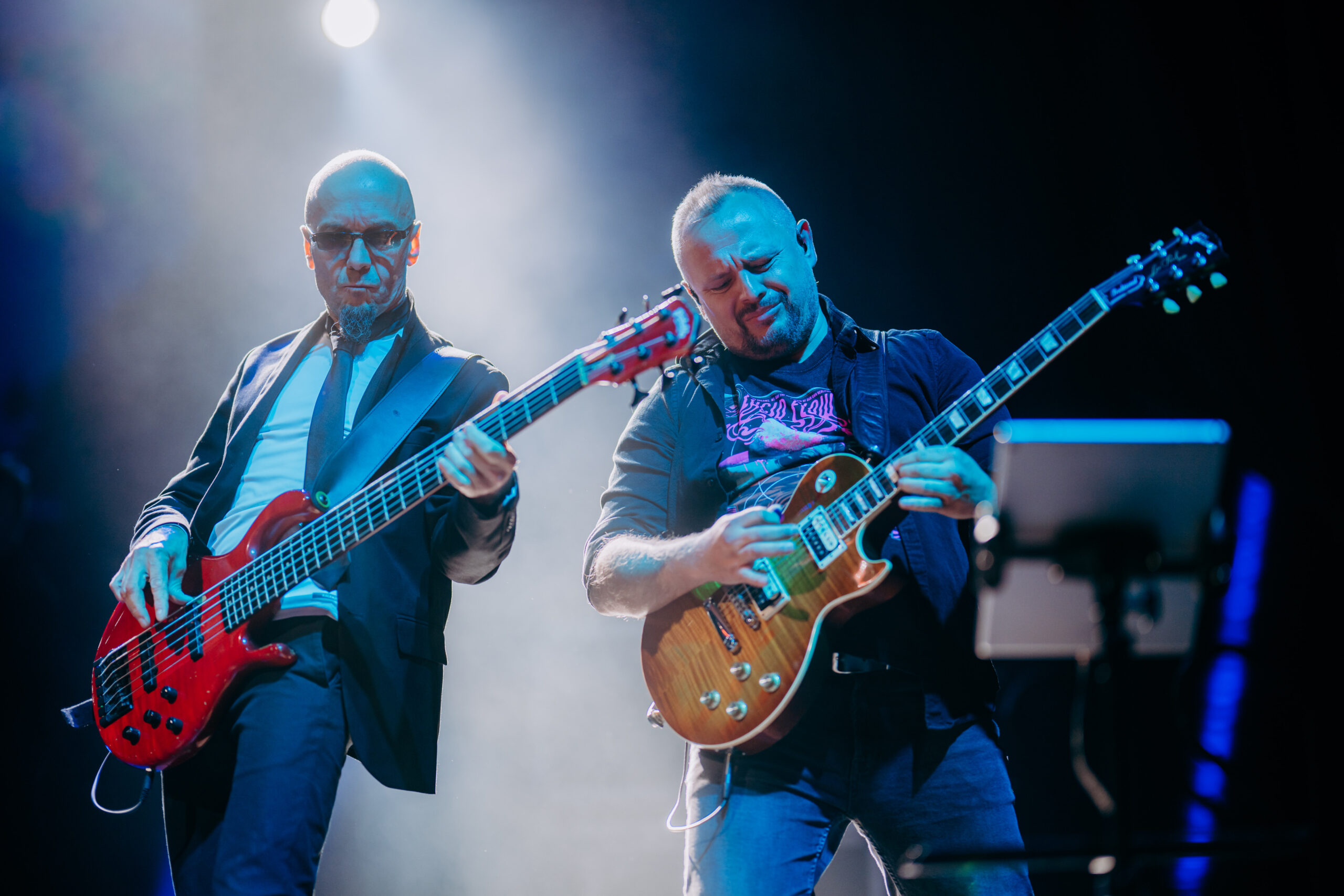
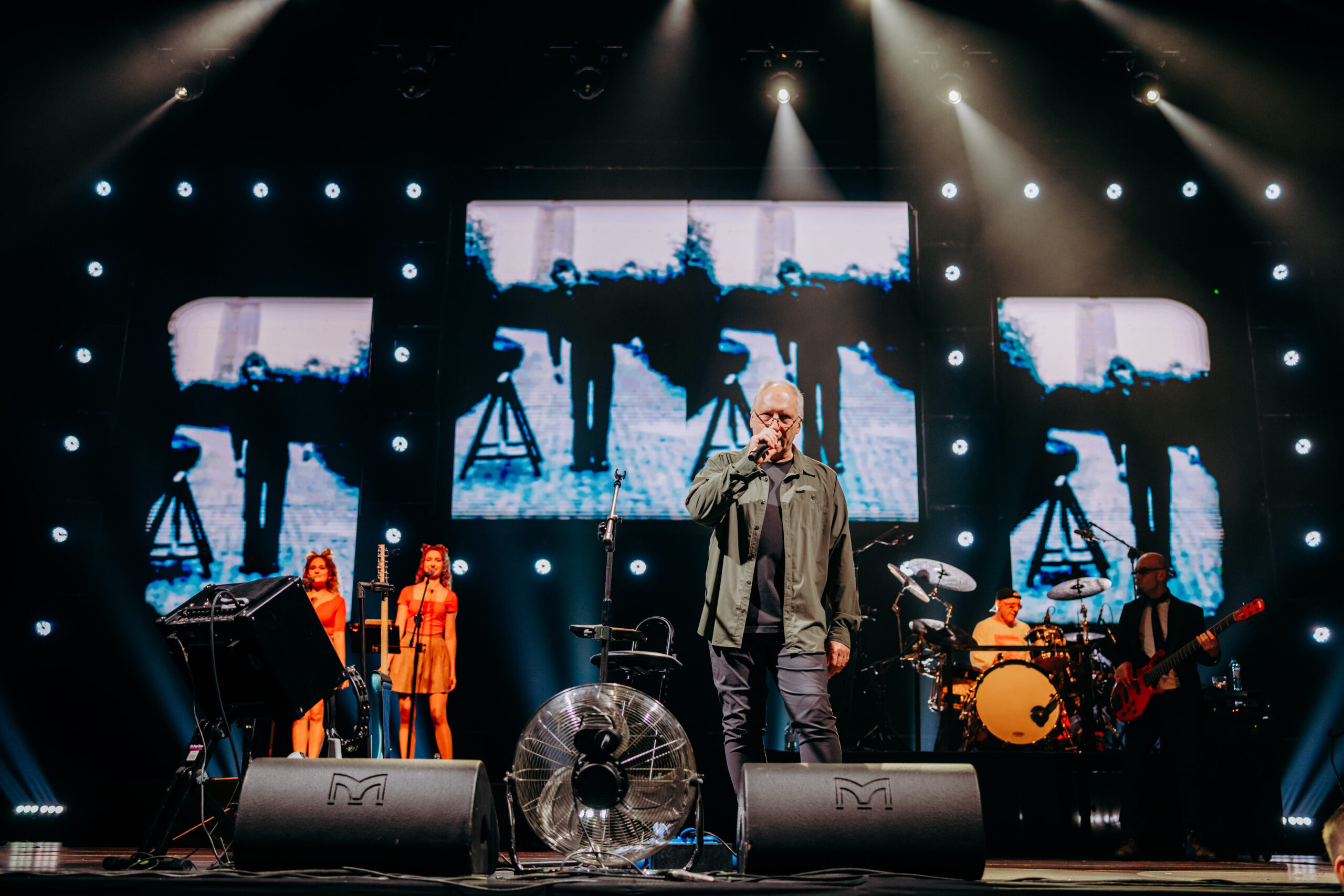
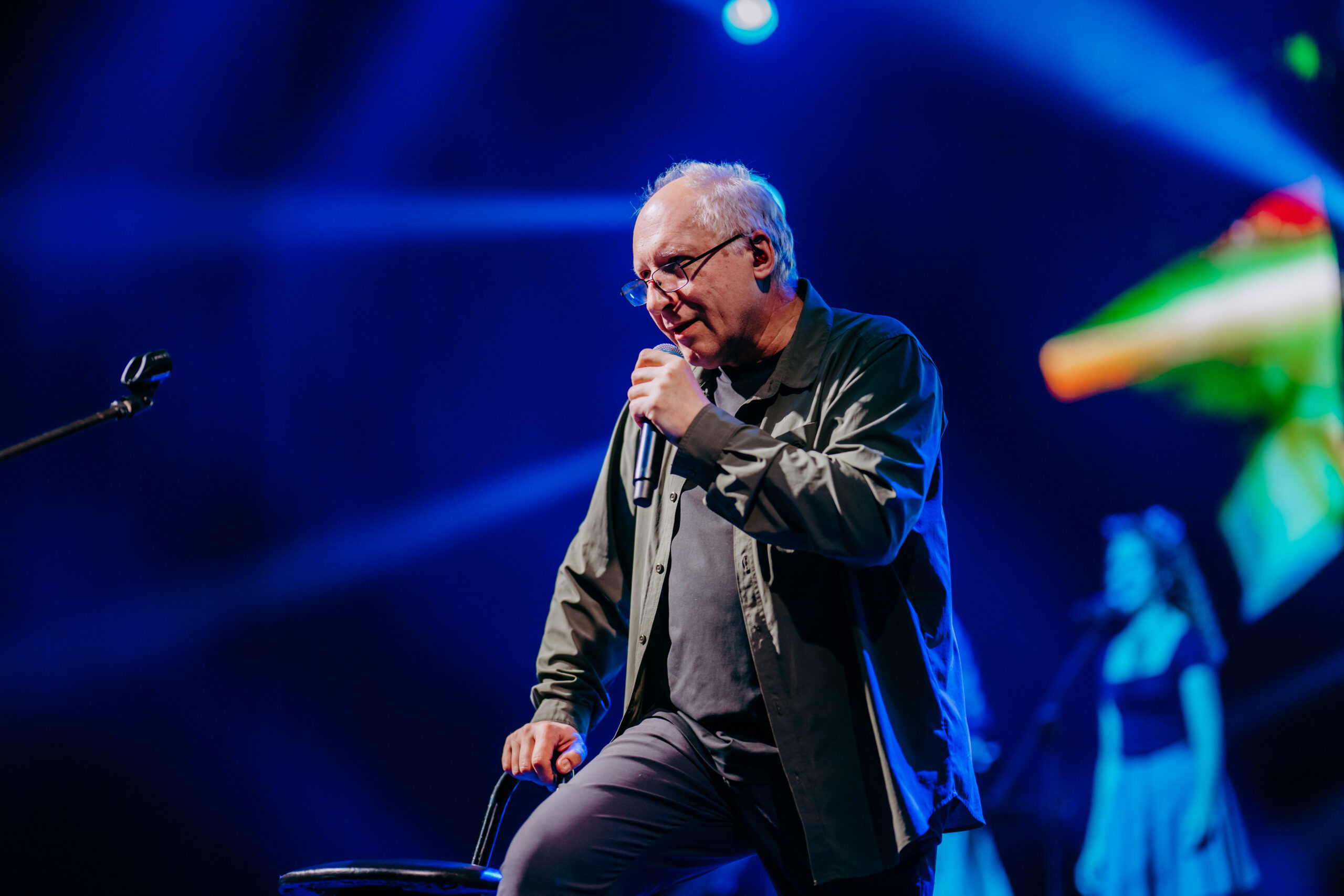
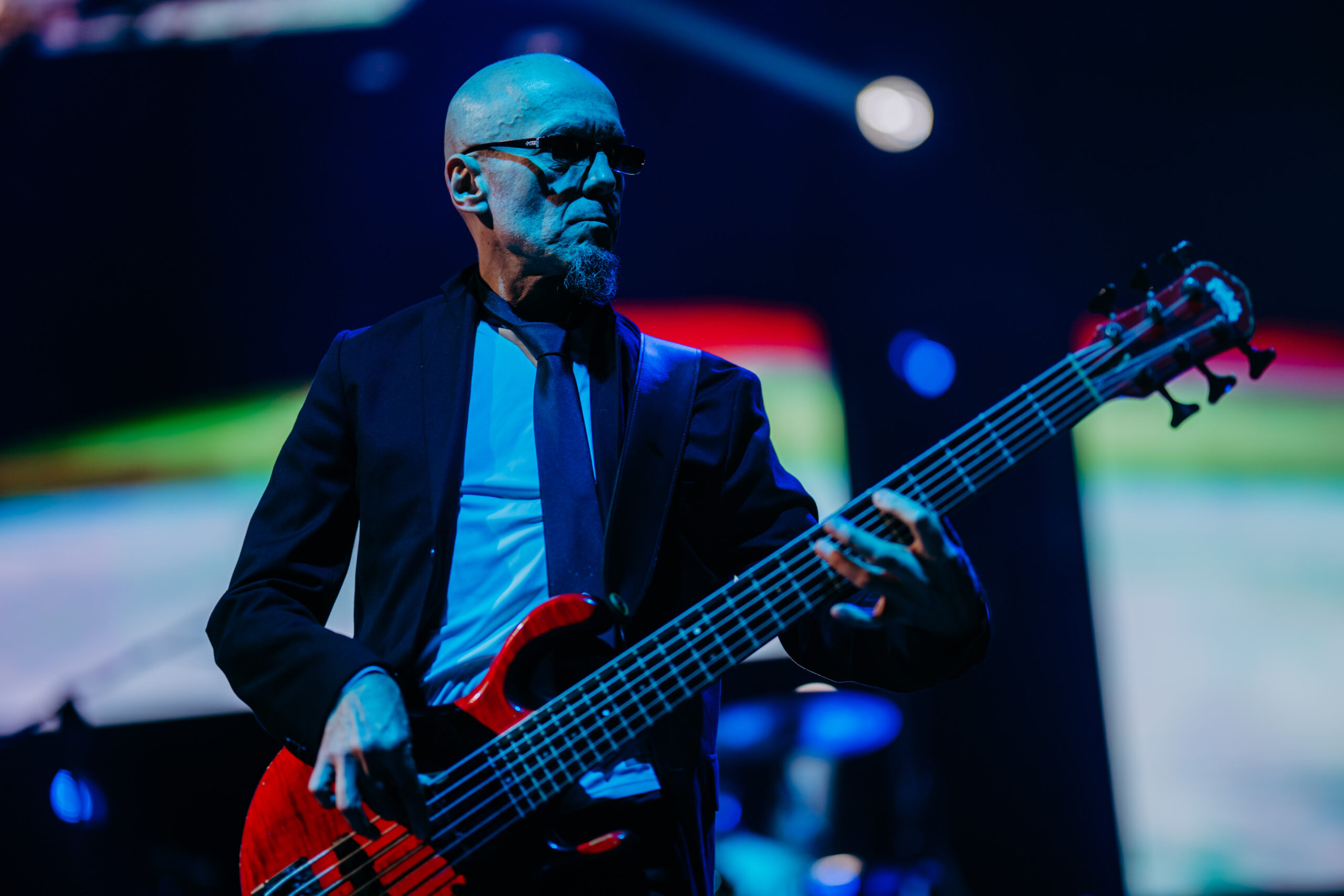
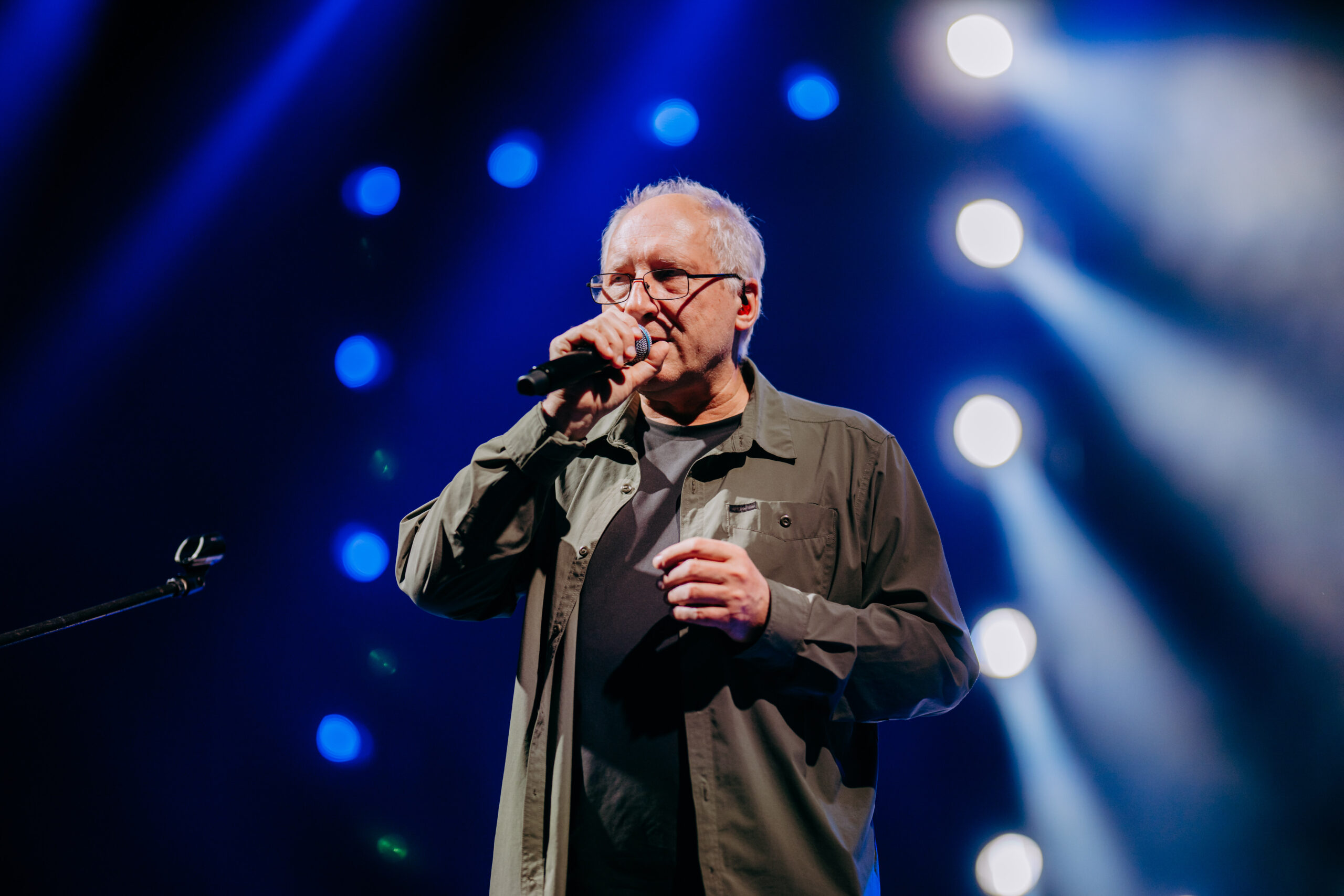
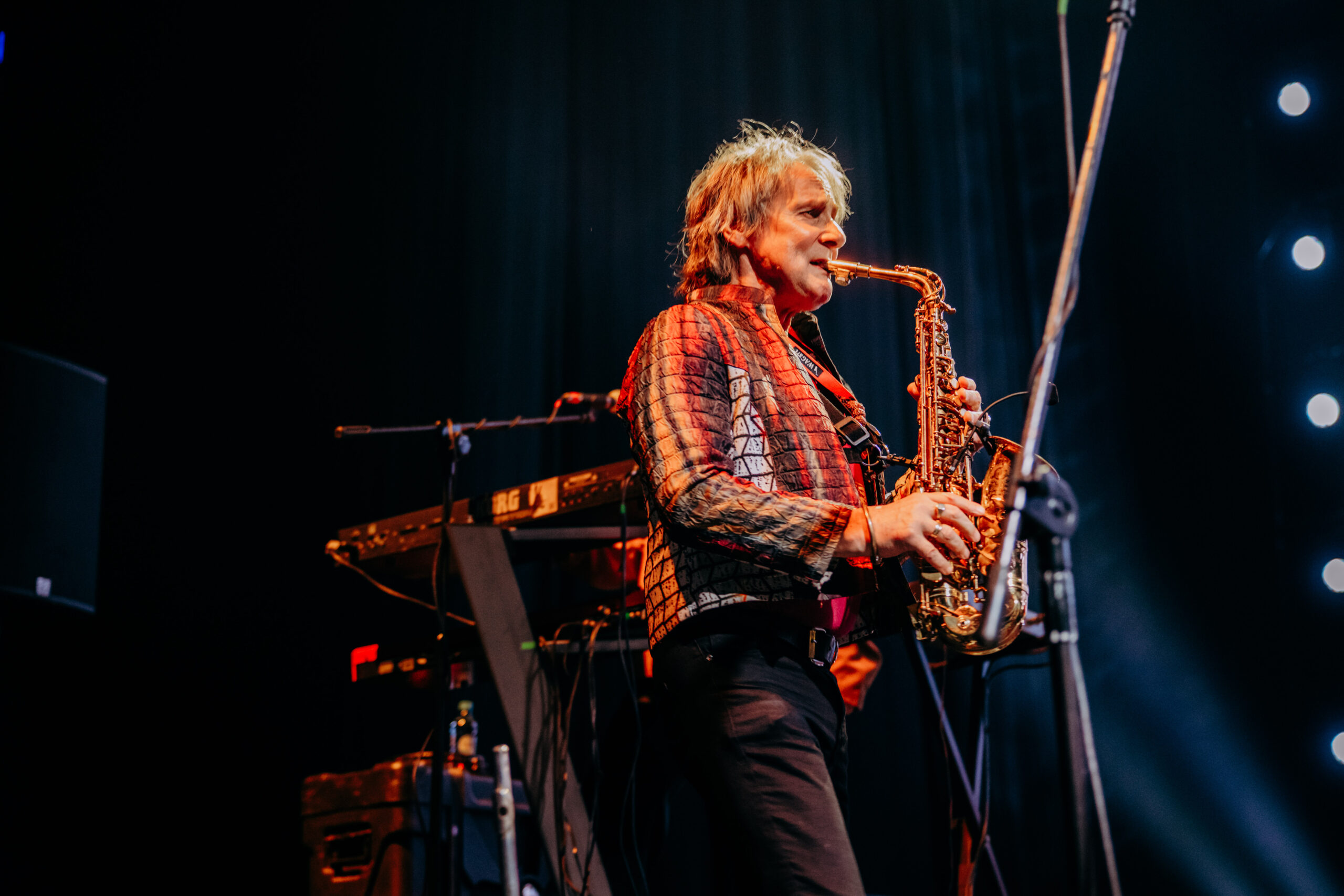
Photo: Radoslaw Zydowicz
Kiler… And now it all makes sense!
The highlight of the main part of the setlist was the timeless “Kiler.” Oh, it’s truly rare that, after nearly three decades, both a film and its title song still manage to amuse and entertain to such a great extent. As one could see firsthand at Atlas Arena, it’s no coincidence that “Kiler” is regularly cited in various lists as one of the best songs from Polish films. Anyone who was at the concert by Kwiat Jabłoni in Łódź in April and was left wanting more when Kuba Sienkiewicz performed this song with his children certainly didn’t go home disappointed on this chilly October evening.
For their encore, the guys from Elektryczne Gitary made it a point of honor to cement their status as the nation’s number one band in the category of nihilistic songs. Of course, this was yet another nod to the audience that day. Which doesn’t change the fact that the song “A Ty co” can easily be considered a serious contender for the title of the nihilists’ anthem. And Saturday’s performance, with its deeply catchy, swinging rhythm, likely only gained it more fans. And right at the end, we were treated to a musically charming explanation of the riddle regarding how many times one must watch “Czterech Pancernych” to have a good time. It was “Wiele razy,” and thus another track from the band’s debut album, a vibrant summary of Saturday’s gathering with the residents of Łódź and the surrounding area. And as if a symbolic wish that events of this kind—filled with nothing but good energy—would take place here again and again with Elektryczne Gitary.
A good dose of smiles
Sure, it’s a bit of a shame that the band didn’t play songs like “Ona jest pedałem” or “Radości,” which have already been featured on their current tour. Some fans were probably secretly hoping until the very end for a surprise like “Spokój grabarza” or “Wyszków tonie.” But with such a rich discography, it’s hard to fulfill every musical wish. What matters most, however, is that on Saturday we were able to confirm that the work of Kuba Sienkiewicz and his bandmates is still alive and well and shows no signs of aging.
As the band played one hit after another at Atlas Arena, it was hard to resist the feeling that the voice of their frontman—not quite 64 years old—remains the voice of common sense in a world woven from paradoxes. Singing along with the crowd of several thousand to one song after another, one felt as if participating in a collective therapy session that, if only for a few moments, allowed one to break free from the mosaic of oddities and contradictions that constantly reach us even in the most unexpected places. It is therefore no exaggeration to say that Elektryczne Gitary once again electrified the audience in Łódź and delivered a powerful dose of excellent entertainment!
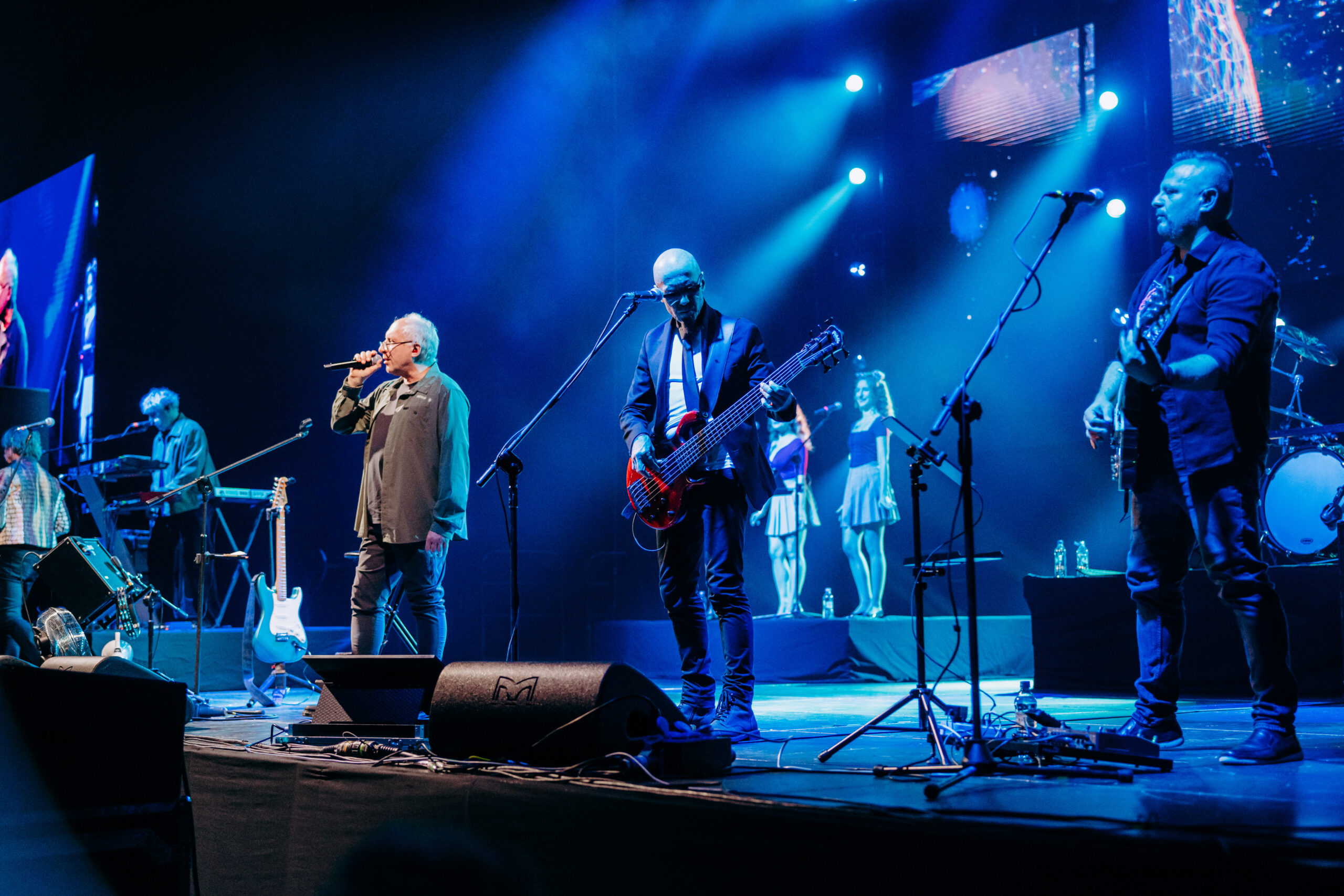
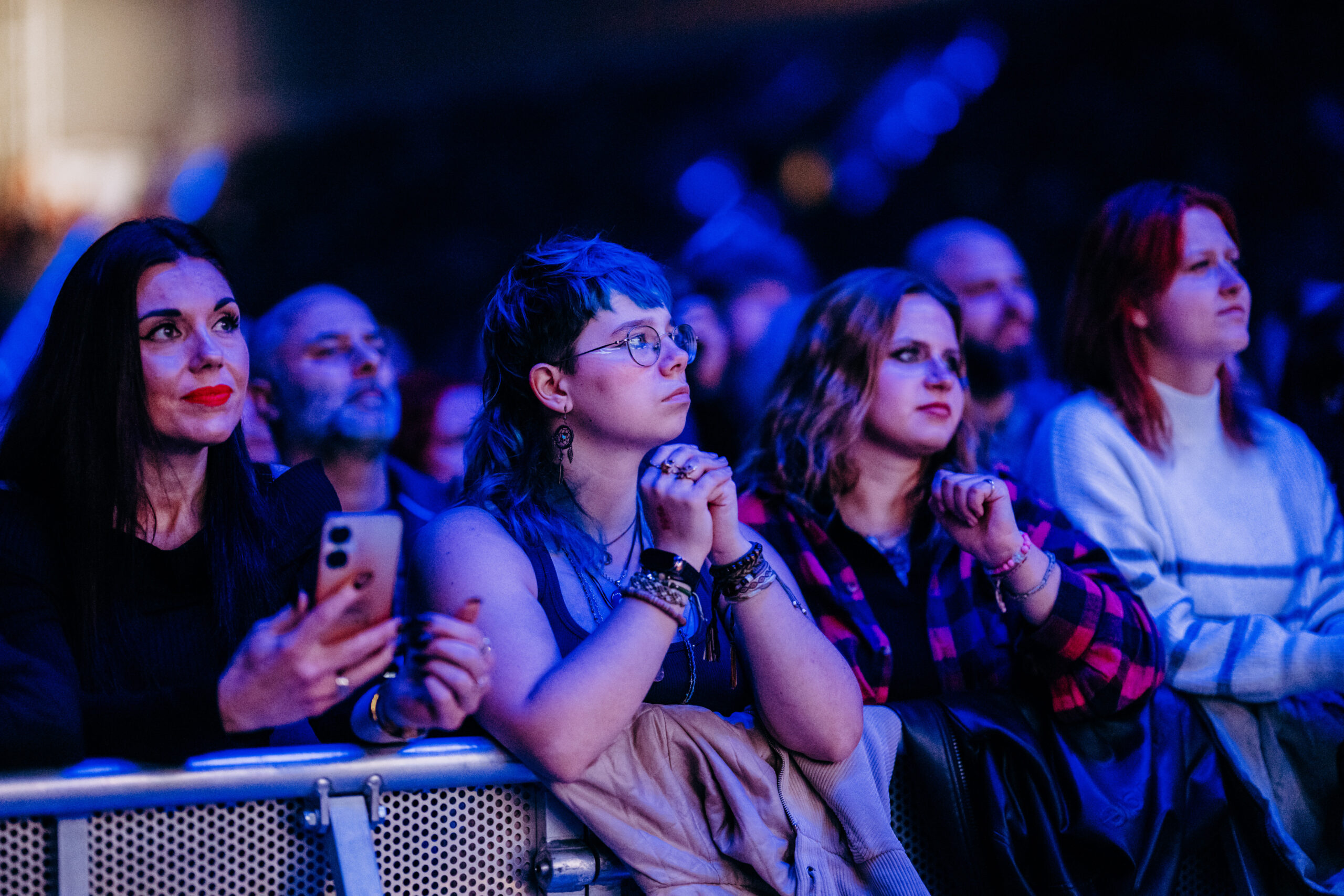

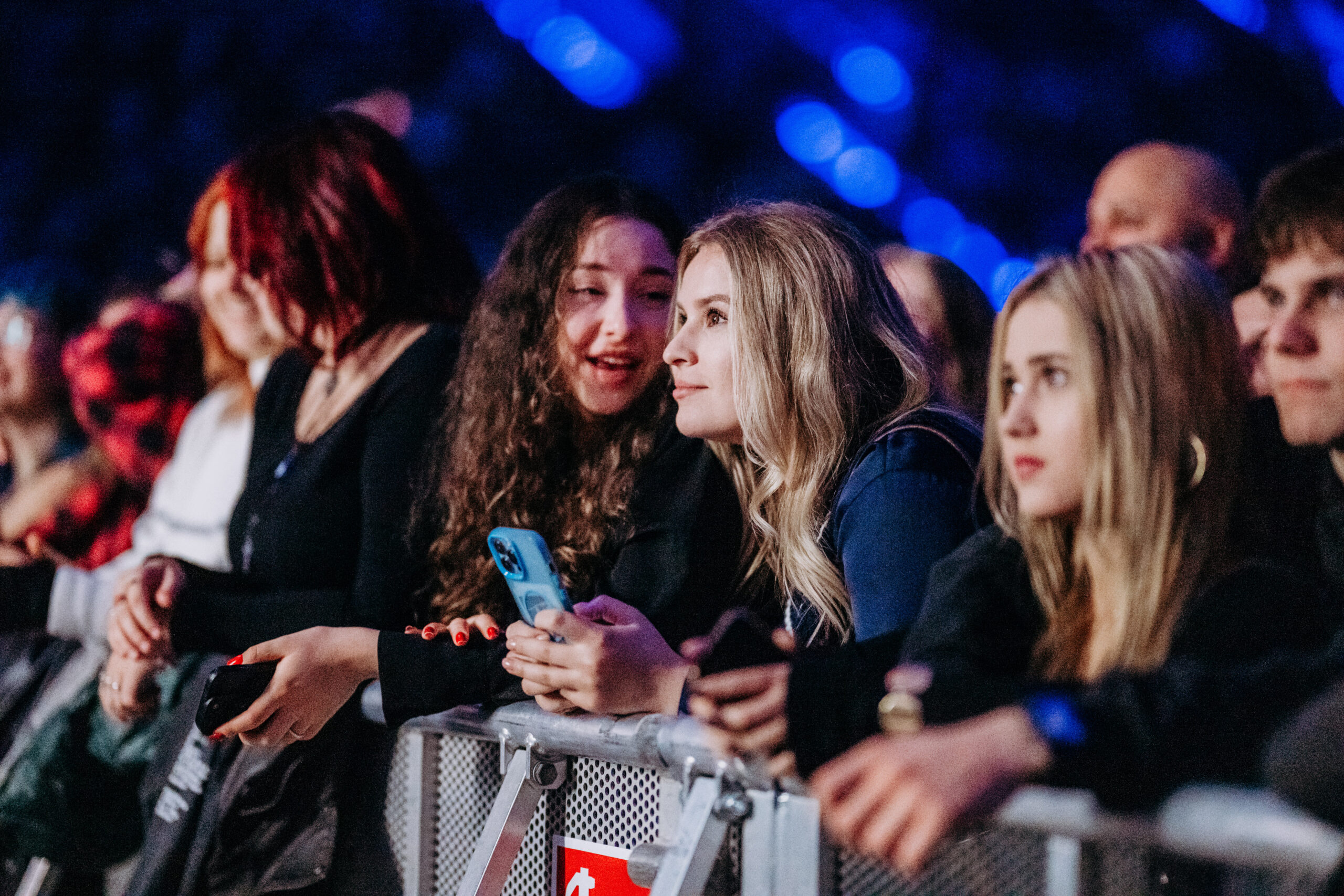
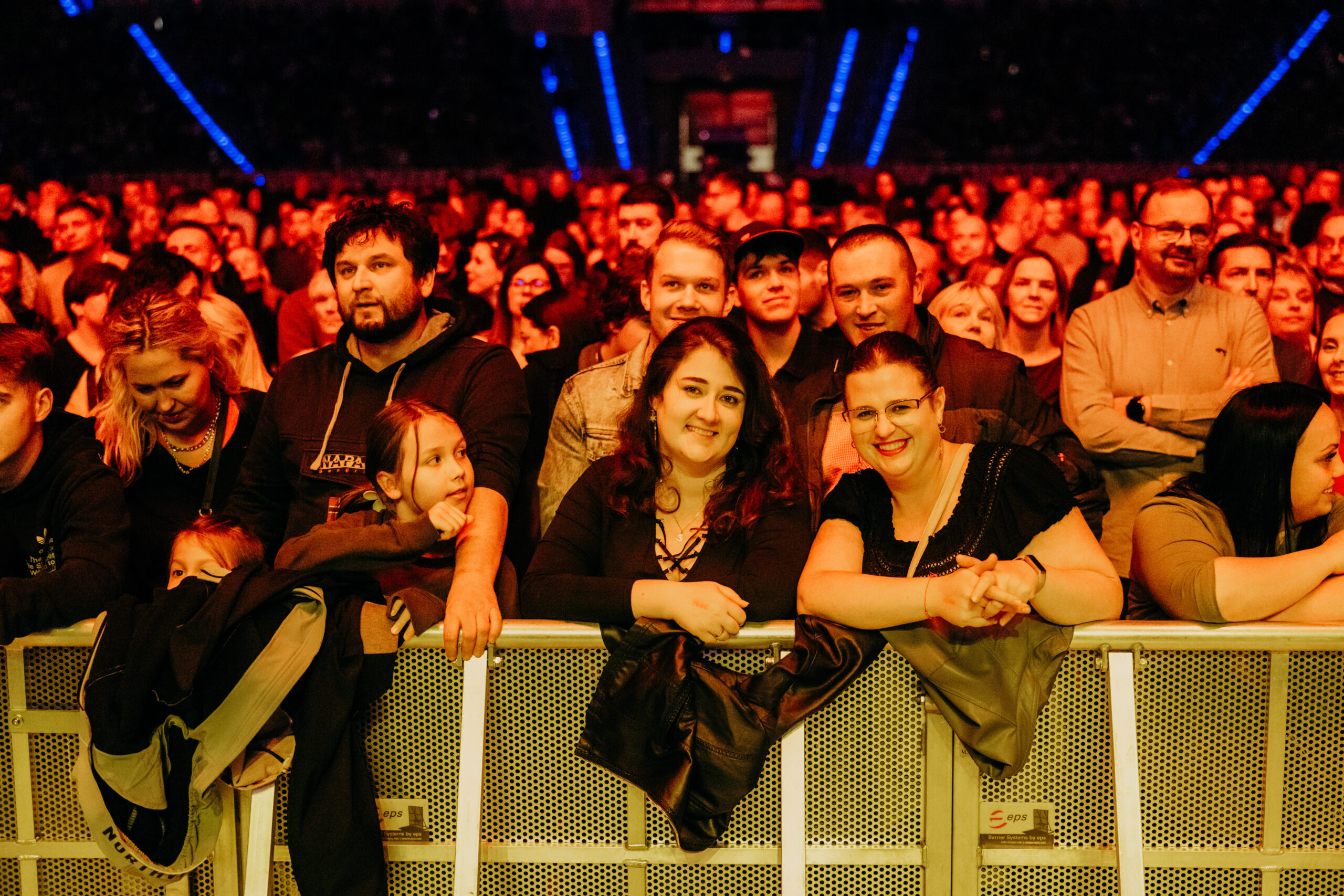
Photo: Radoslaw Zydowicz
Bartek Król– A lawyer by education, a journalist by profession. He has worked in various roles in the media for over two decades. His greatest passion is travel—he has visited nearly 50 countries so far and can’t wait for his next adventures. He’s lost count of the concerts he’s attended, but there have certainly been “over three hundred.” He listens to albums while running, among other things—he can often be spotted on the trails of Łódź and the surrounding region. He prefers dark and fairly heavy sounds, but he’s also enthusiastic about artists who perform completely different kinds of music.